

TL;DR
- Codex reaches B2B data enrichment three ways: a native MCP server, a universal CLI connector, or a direct REST API.
- Data access is now a commodity. The real leverage is letting the agent do the filtering, vetting, and enriching grunt work.
- Verified match rate and cost per fully enriched contact matter far more than headline database size, which decays fast.
- Vibe Prospecting runs on Explorium's aggregator-of-aggregators layer, 150M+ companies and 800M+ profiles, with waterfall enrichment built in.
- Vibe credits apply to Claude today, not ChatGPT or Codex; for Codex the path is the embeddable MCP any agent can call.
- Start on the 400-credit free trial valid 90 days; a fully enriched contact costs 8 credits.
Q1: What are the 8 best B2B data enrichment MCPs and APIs for Codex in 2026, and how were they evaluated? [toc=1. Best Enrichment Tools]
The eight best B2B data enrichment options for OpenAI Codex in 2026 are Vibe Prospecting, People Data Labs, Apollo, Clay, ZoomInfo, Cognism, Clearbit, and SyncGTM. I scored each on five things that actually change your day: how it connects to Codex, data coverage, verified match rate, cost per fully enriched contact, and the data types you get back. Codex reaches all of them through one of three paths, a native MCP server, a universal CLI connector, or a direct REST API.
🧭 The category moment nobody is naming
A revenue engineer pinged me last quarter, mid-build, with a Codex window open. He had wired three enrichment APIs by hand. Each one had its own auth, its own schema, and its own retry logic. He had spent two days plumbing before a single contact got enriched. That is the real tax. Not finding data, but wiring it.
Here is the contrarian part. Most "best enrichment API" roundups still treat this as a coverage contest, who has the most records. I think that read gets it backwards. Access to data is now a commodity. Anyone can reach 200 million profiles. The thing that breaks is the work sitting on top: filtering, vetting, and acting on it inside the agent you already code in.
🪜 Why I frame this as a labor shift, not a feature race
I have spent six-plus years building Explorium’s data layer, and the pattern is always the same. The market moved through three phases: UI, then API, then Agent. Humans searched manually, then Google arrived. Humans filtered lists by hand, then Apollo arrived. Developers automated access, then APIs arrived. Agents now execute the grunt work, and that is the Codex moment.
So the question for Codex is not "which database is biggest." It is "which provider lets the agent do the access, filter, and enrich work, so you keep the judgment." That reframe drives every criterion below.
The 8 providers at a glance
- Vibe Prospecting: Best for solo operators, SDRs, and RevOps who want the agent to run filtering and enrichment inside Claude, with Codex reaching the same data through an embeddable MCP.
- People Data Labs: Best for engineers who genuinely want raw data and will build the application logic themselves.
- Apollo: Best for teams that want an all-in-one UI and accept manual, human-run list-building.
- Clay: Best for ops teams willing to maintain custom waterfall recipes for maximum flexibility.
- ZoomInfo: Best for enterprises that can absorb annual contracts and procurement.
- Cognism: Best for EMEA-focused teams that need compliance-first contact data.
- Clearbit: Best for real-time firmographic enrichment inside an existing marketing stack.
- SyncGTM: Best for a fallback MCP waterfall when a segment keeps coming back empty.
Master comparison table
<caption>The 8 Best B2B Data Enrichment Providers for Codex in 2026</caption>
| Provider | Best For | Key Strength | Pricing Model |
|---|---|---|---|
| Vibe Prospecting | Operators and RevOps who want the agent to do the grunt work | Agent-native MCP on Explorium’s aggregator-of-aggregators data layer, 150M+ companies and 800M+ profiles | Usage-based credits, from $19/mo, 400-credit free trial valid 90 days, 8 credits per fully enriched contact, credits valid 12 months, Claude-only today |
| People Data Labs | Engineers building their own logic | Large raw person and company dataset behind a clean API | Usage-based / per-record API pricing |
| Apollo | All-in-one manual prospecting | UI plus database plus sending in one tool | Seat-based subscription with credit limits, free tier |
| Clay | Ops-built waterfall workflows | Highly flexible multi-provider waterfall | Credit-based, usage can vary per row |
| ZoomInfo | Enterprise data buyers | Broad enterprise coverage and intent | Seat-based annual contract, custom quote |
| Cognism | EMEA compliance-first teams | EU coverage and consent handling | Annual contract, pricing not publicly disclosed |
| Clearbit | Real-time firmographic enrichment | Fast firmographic API inside marketing stacks | Self-service tiers, then custom plans |
| SyncGTM | Fallback MCP waterfall across 20+ vendors | 300M+ companies, 600M+ profiles (vendor-stated) | Credit-metered, no free tier |
Our evaluation criteria
I picked five primary criteria because they are the ones that move a Codex buying decision. I left out things like brand recognition and seat counts, because they do not change whether your agent gets clean data.
- ⚙️ Codex integration path: Whether you connect via a native MCP server, a universal CLI connector, or a direct REST API. This decides how much you build before value. Codex supports MCP natively through codex mcp add or ~/.codex/config.toml.
- 📊 Data coverage: Companies and profiles available. Coverage is table stakes, not a winner.
- ✅ Verified match rate: How often you get a deliverable, triple-verified contact. This beats raw database size every time.
- 💰 Cost per fully enriched contact: Normalized to one prospect plus email plus phone, so credit math becomes comparable. Vibe charges 8 credits for that bundle.
- 🗂️ Data types: Firmographics, contacts, emails, phones, and signals returned.
🔍 Why match rate beats database size
Here is the felt sense from actually running this work. A list of 100,000 records means nothing if a quarter of the emails bounce. I might be slightly conservative here, but B2B contact data decays fast, and a big static export ages badly within a year. That is why I weight verified match rate over headline coverage.
This is also where the data layer matters. We built Explorium as an aggregator of aggregators, pulling from 50+ sources and running waterfall enrichment to fill gaps, rather than betting on one database. It is the difference between a single credit report and a bureau that pulls from many. With Vibe Prospecting, that waterfall is built into the data layer, so the agent does not stitch providers together by hand.
Who this guide is for
- Solo operators and founders running their own outbound who code inside Codex or Claude.
- SDRs, AEs, and RevOps teams frustrated with manual list-building in Apollo, Clay, or ZoomInfo.
- GTM and revenue engineers wiring enrichment into agent workflows through MCP.
- Technical and data teams who would otherwise engineer against a B2B data API.
- Recruiters, investors, and analysts who work with business data at volume.
🧪 How I evaluated these providers
I leaned on primary sources only. OpenAI’s Codex MCP documentation for integration paths, the official MCP specification for how agent access differs from an API, Vibe Prospecting and Explorium documentation for product facts, and first-party review platforms (G2, Capterra, Trustpilot, and Reddit) for verified user patterns. Per-vendor reviews and detailed scoring come in the sections that follow.
One honest scope note before we go deeper. If you genuinely want raw data behind an API to engineer against yourself, that is Explorium’s API, not Vibe. And if you need a single one-off lookup, a free UI search is enough. Vibe earns its place when you work B2B data at volume and want the agent to carry the load.
1.1 Vibe Prospecting: Best for operators who want the agent to do the grunt work [toc=1.1 Vibe Prospecting]
Overview
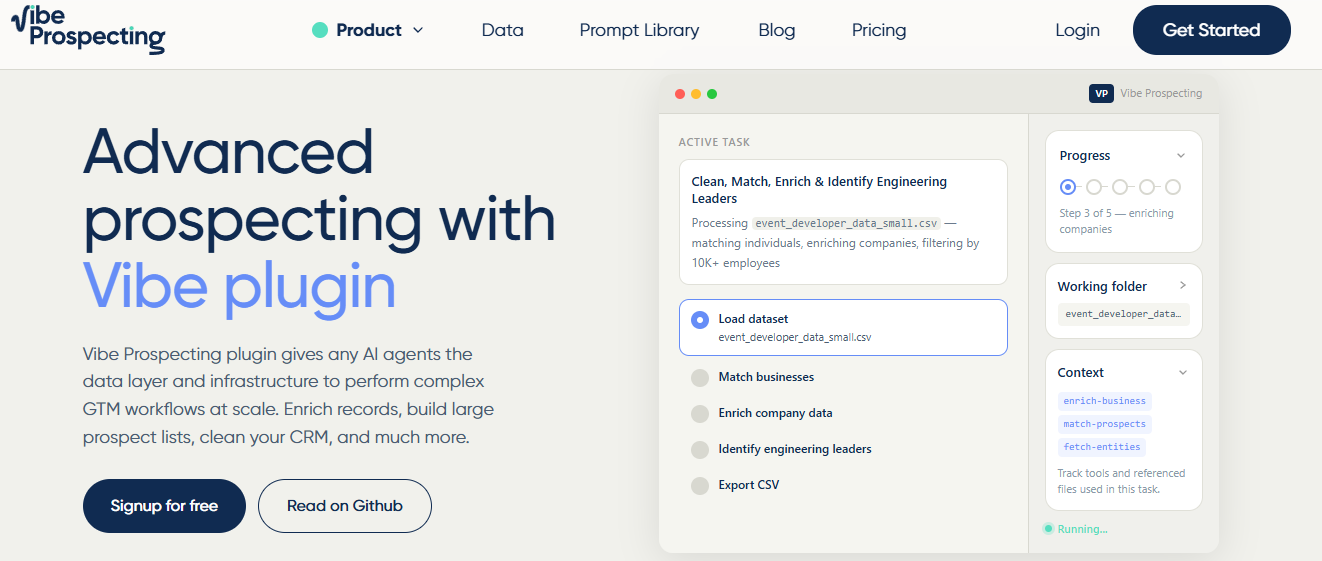
Vibe Prospecting is an agent-native prospecting product built on Explorium’s B2B data layer. It surfaces in three live forms: an MCP connector for Claude Code and other agents, a chat UI, and an embeddable MCP you wire into existing pipelines where you would have used an API. The agent does the reasoning. Vibe supplies agent-ready access to the data.
Core Services
- 🔌 MCP connector for Claude Code and other agents, so the agent runs filtering and enrichment in one motion.
- 💬 Chat UI for natural-language queries with no setup or integration.
- 🧩 Embeddable MCP for any pipeline that previously called a B2B data API.
- 🗂️ Access to Explorium’s aggregator-of-aggregators layer, 150M+ companies and 800M+ profiles from 50+ sources.
- ✅ Waterfall enrichment that fills gaps across providers to lift match rate.
Metrics compared on
- ⚙️ Codex integration path: Reaches Codex through the embeddable MCP and direct data access. Native credits run inside Claude today, so for Codex the honest path is the MCP/API surface any agent can call.
- 📊 Data coverage: 150M+ companies and 800M+ profiles, sourced from 50+ providers.
- ✅ Verified match rate: Waterfall enrichment across many sources targets the accuracy gap a single database leaves open.
- 💰 Cost per fully enriched contact: 8 credits for prospect plus email plus phone.
- 🗂️ Data types: Firmographics, contacts, emails, phones, and prospect and account signals.
Why Companies Consider Vibe Prospecting
The decision logic is rarely "who has more records." It is "who removes the build." With an API, you engineer a structured input and output path for every call. With an MCP attached to an agent, input arrives by any path and output comes back by any path, so the integration tax mostly disappears.
The second reason is the work itself. Prospecting has always had two filters: the hard filter (location, size, and industry) and the light-but-endless judgment after the list pulls, "is this a fit, which bucket, is it big enough." That second filter was never automatable before. With Vibe, the agent runs both from one natural-language instruction, so you keep the judgment and hand off the grunt work.
Ideal Customer Profile
- 👤 Solo operators, founders, SDRs, AEs, recruiters, analysts, and RevOps teams.
- 🌍 Global data, US-first coverage.
- 🧠 Buyers who work B2B data at volume and want the agent to act, not just return a list.
- 📈 Anyone burning hours on access, filtering, vetting, and list-building before real work begins.
Commercial Model
Usage-based credits, from $19/mo, with a 400-credit free trial valid 90 days. A fully enriched contact costs 8 credits, paid credits are valid 12 months, non-refundable, with no rollover. Credits apply to Claude today, not ChatGPT.
When to Shortlist
- ✅ You code inside Claude or an agent and want enrichment to happen there.
- ✅ You want match rate from a multi-source waterfall, not one database.
- ✅ You want to start without procurement, on a free trial.
When Not to Shortlist
- ❌ You want raw data behind an API to engineer against yourself. That is Explorium’s API, not Vibe.
- ❌ You need a single one-off or tiny-volume lookup. A free UI search is enough.
- ⚠️ You need credits inside ChatGPT today. Credits are Claude-only right now.
Customer Reviews
“What I like best is the ability to use natural language logic instead of rigid filters… It doesn’t just look for ‘Sustainability,’ it finds the specific high-footfall venues like stadiums and universities where our operational speed is a unique selling point.”
Tristan W. Vibe Prospecting G2 Verified Review
“The tool’s biggest strength, its broad AI-driven search, is also where you can run into trouble. If your prompt isn’t surgically specific regarding segments, locations, and job titles, the output can include some gunk… You really have to box the AI in with negative constraints and very detailed ICP descriptions.”
Tristan W. Vibe Prospecting G2 Verified Review
That second quote is fair, and I will own it. The agent is only as sharp as the context you give it. Finite, well-described constraints beat a vague prompt every time, and that is a real part of the work, not a bug we hide.
1.2 People Data Labs: Best for engineers who want raw data and will build the logic [toc=1.2 People Data Labs]
Overview
People Data Labs (PDL) is a raw B2B data provider behind a clean, well-documented API. It serves engineers and data teams who want direct access to person and company records and will build the application layer themselves. It sits firmly on the data-access side of the category, not the workflow-completion side.
Core Services
- 🔧 REST API for person and company enrichment.
- 🗂️ Large dataset of person and company profiles.
- 🧱 Schema-first records for engineering into your own systems.
Metrics compared on
- ⚙️ Codex integration path: Direct REST API. You write the calls and the logic yourself.
- 📊 Data coverage: Strong contact-data coverage at scale.
- ✅ Verified match rate: Per-record enrichment quality, validated by your own logic.
- 💰 Cost per fully enriched contact: Usage-based, priced per record.
- 🗂️ Data types: Person and company records, firmographics, and contact fields.
Why Companies Consider People Data Labs
If raw data is genuinely what you want, PDL is a clean way to get it. Teams with real developer resources pick it because they want full control over how data flows into their product.
The flip side is the structural trade-off. API-first by design means no dashboard, no CRM sync, and no path from data to action unless you build it. PDL hands you data. You write everything around it. That is the sharpest MCP contrast: with Vibe, the same class of data is reached by an agent through natural language with no integration build.
Ideal Customer Profile
- 👤 GTM engineers, data engineers, and data-partnership teams.
- 🧑💻 Teams with engineering capacity to build the application layer.
- 📦 Use cases where raw records, not finished workflows, are the goal.
Commercial Model
Usage-based API pricing, charged per record. One reviewer reported a paid plan around $100/month before an abrupt account issue, noted below. Confirm current pricing on the provider’s site before committing.
When to Shortlist
- ✅ You want raw data and have engineers to build against it.
- ✅ You need schema-first records inside your own product.
- ✅ Data access, not workflow completion, is the goal.
When Not to Shortlist
- ❌ You want the work done, not just the data delivered.
- ❌ You have no engineering resources to build the logic.
- ❌ You expect a dashboard, CRM sync, or built-in outreach.
Customer Reviews
“Product was useful while it worked, which wasn’t long. Switched from free trial to paid plan ($100/month). After a few days, account disabled with no warning or explanation. Support unresponsive after multiple contact attempts, even after waiting 1 week.”
Verified User, Computer Software People Data Labs G2 Verified Review
“Data was ok but payment system is a scam. Very hard to get off their hook once signed up.”
Glissando AI People Data Labs Trustpilot Verified Review
To be fair to PDL, the data itself draws fewer complaints than the billing and support. If you have the engineering muscle and want raw records, the structural fit can still be right.
1.3 Apollo: Best for teams that accept manual, human-run list-building [toc=1.3 Apollo]
Overview
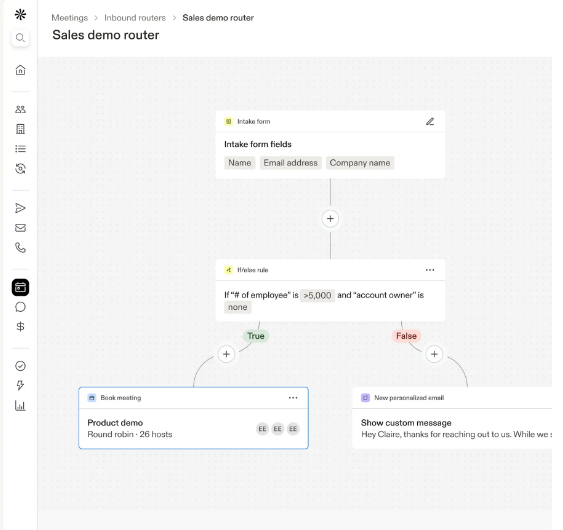
Apollo is an all-in-one prospecting platform built for humans to search and filter manually. It bundles a UI, a contact database, and a sending engine in one tool, plus an API. It is the most recognized name in the category, which is part of why teams reach for it first.
Core Services
- 🖥️ UI for building lead lists with multiple filters.
- 📇 Contact and company database with email and phone unlocks.
- ✉️ Built-in email and outreach engine.
- 🔗 CRM tracking and a Chrome extension.
- 🧩 API access for programmatic use.
Metrics compared on
- ⚙️ Codex integration path: Direct API. The platform itself is built for human operation, not autonomous agent action.
- 📊 Data coverage: Large contact database with broad reach.
- ✅ Verified match rate: Reviewers widely report accuracy below advertised rates, with meaningful bounce.
- 💰 Cost per fully enriched contact: Credit-based unlocks inside seat tiers.
- 🗂️ Data types: Contacts, emails, phones, firmographics, and basic intent.
Why Companies Consider Apollo
The buying logic is simple: one tool, affordable entry, and a familiar UI. Teams that want to search, unlock, and send in one place pick it for convenience.
The structural trade-off is that a human operates every step. Apollo optimizes for human-run list-building, not autonomous action, and reviewers commonly advise treating it as a data source rather than a sending engine. Vibe’s contrast is direct: the agent does the filtering and vetting Apollo makes you do by hand, and the waterfall layer targets the accuracy gap a single database cannot close.
Ideal Customer Profile
- 👤 SDRs and small sales teams who want a single UI.
- 💵 Budget-conscious buyers starting outbound.
- 🧭 Teams comfortable doing manual list-building and vetting.
Commercial Model
Seat-based subscription with a free tier and credit limits on exports and mobile unlocks. Reviewers note that export and credit limits can feel low for active teams.
When to Shortlist
- ✅ You want an all-in-one UI for manual prospecting.
- ✅ You are starting outbound on a tight budget.
- ✅ You treat Apollo as a data source and verify before sending.
When Not to Shortlist
- ❌ You want an agent to run filtering and vetting autonomously.
- ❌ You need match rates a single database structurally cannot reach.
- ⚠️ You rely on mobile accuracy for high-volume calling.
Customer Reviews
“Easy to create persona, multiple filters, verified email option for low bounce rates, built-in CRM to track replies and calls.”
Tejender K., Digital Marketing Executive Apollo G2 Verified Review
“Contact info frequently missing or incorrect. Half the day calling wrong/disconnected numbers. Mobiles frequently wrong. Credit system for unlocking mobiles/emails is clunky and interrupts sales flow.”
Verified User, IT Services Apollo G2 Verified Review
“Half of exported data was on spam lists… Affordable B2B sales data.”
Verified User, Insurance Apollo G2 Verified Review
I want to be even-handed here. Apollo is genuinely useful as an affordable data source, and the first review reflects that. The accuracy complaints are not a support bug, they are what a single-database model produces at scale, which is exactly the gap waterfall enrichment is built to close.
1.4 Clay: Best for ops teams willing to maintain custom waterfall recipes [toc=1.4 Clay]
Overview
Clay is a flexible workflow builder for data enrichment and outreach. You orchestrate everything: pick providers, chain lookups, and build a custom waterfall for each task. It serves GTM and RevOps teams who want maximum control and will invest the time to wield it.
Core Services
- 🧱 Visual workflow builder with custom waterfall per task.
- 🔄 Multi-provider enrichment in one subscription.
- 🤖 AI tools (Claygent) for keyword-based company and people search.
- 🔗 Many integrations to automate end-to-end workflows.
- 🛠️ Micro-ETL transformations without a full data pipeline.
Metrics compared on
- ⚙️ Codex integration path: API and integrations, but you build and maintain the recipe. The async API is not the easiest fit for agents.
- 📊 Data coverage: Broad, since it pulls from many providers you choose.
- ✅ Verified match rate: Depends on your waterfall design and the providers you wire in.
- 💰 Cost per fully enriched contact: Credit-based, and per-row cost can vary from the stated amount.
- 🗂️ Data types: Contacts, emails, phones, firmographics, intent, and custom enrichments.
Why Companies Consider Clay
The pull is flexibility. If you know what you are doing, you can build almost anything and combine the best data sources in one place. For an ops team with time, that control is genuinely powerful.
The structural trade-off is that flexibility is the cost. Reviewers report a steep learning curve, credit burn where failed lookups still consume credits, and that it needs to be managed by ops rather than used by reps. You become the workflow engineer. With Vibe, you state the objective in natural language instead of building and maintaining a waterfall recipe, so the agent runs the workflow rather than you operating a spreadsheet engine.
Ideal Customer Profile
- 👤 GTM engineers and RevOps practitioners.
- 🧠 Teams with time to learn and maintain workflows.
- 🏢 Agencies and growth teams scaling repeatable enrichment.
Commercial Model
Credit-based pricing. Reviewers note per-row credit cost can vary by 100% or more from the stated amount, and that 3,000 free credits come only with a paid plan. Confirm current credit math before committing.
When to Shortlist
- ✅ You have an ops person who will own the build.
- ✅ You want to combine multiple data providers in one place.
- ✅ You need custom, repeatable enrichment logic.
When Not to Shortlist
- ❌ You want reps to self-serve without an ops layer.
- ❌ You want the agent to run the workflow, not you.
- ⚠️ You need predictable per-row credit costs.
Customer Reviews
“Transformative for GTM operations and data enrichment. Deeply flexible and integrated with modern GTM toolstack… CS team available and helpful during ramp.”
Verified User, IT Services Clay G2 Verified Review
“Per-row credit cost can vary 100% from stated amounts (e.g., stated 11 credits/row, actual 25). Contact data quality varies wildly, feels like a black box.”
Verified User, IT Services Clay G2 Verified Review
“Credit system is broken. Pricing is broken. Not fully transparent with rollover limit. Never helped when issues arose.”
Raphael A., Marketing Lead Clay G2 Verified Review
I respect Clay a lot, and the first review captures why teams love it. The credit-burn and complexity complaints are not support gripes, they are the natural cost of a build-it-yourself model.
1.5 ZoomInfo: Best for enterprises that can absorb annual contracts [toc=1.5 ZoomInfo]
Overview
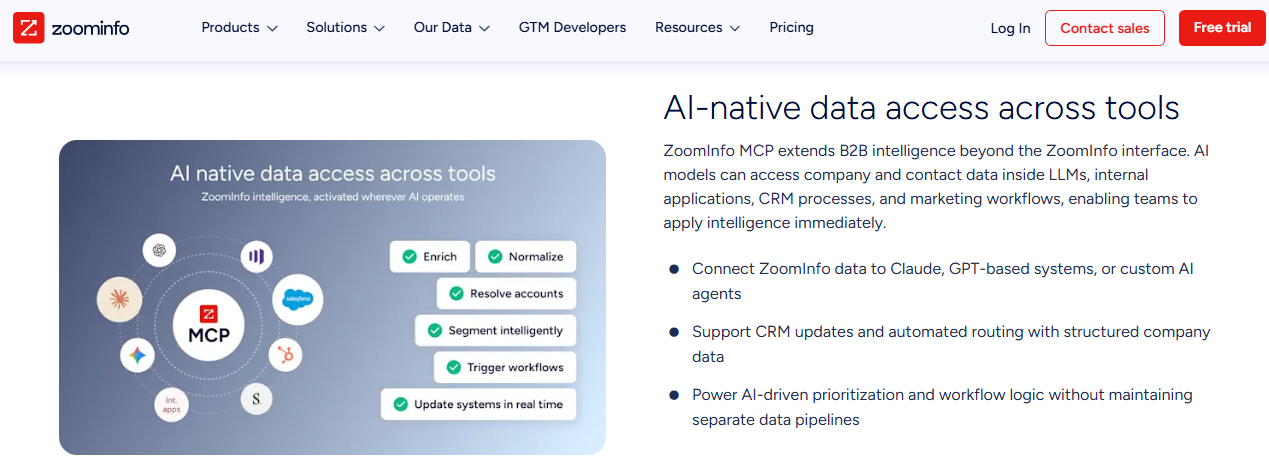
ZoomInfo is an enterprise data platform with broad coverage, intent data, and CRM integrations. It serves large sales and marketing organizations that buy data on an annual, procurement-heavy basis. It is built for committee buying, not self-serve exploration.
Core Services
- 📇 Large enterprise contact and company database.
- 📊 Intent and signal data for account prioritization.
- 🔗 Native CRM integrations and a Chrome extension.
- 🧩 API access for programmatic enrichment.
Metrics compared on
- ⚙️ Codex integration path: Direct API, with a platform built for human operation through a UI.
- 📊 Data coverage: Among the broadest enterprise coverage available.
- ✅ Verified match rate: Strong on company data, with enterprise-grade depth.
- 💰 Cost per fully enriched contact: Bundled into seat-based annual contracts, not per-record.
- 🗂️ Data types: Contacts, firmographics, intent, and org charts.
Why Companies Consider ZoomInfo
The reason is breadth and brand. Large teams pick ZoomInfo for deep coverage, intent signals, and CRM integrations that fit an enterprise stack.
The structural trade-off is the commercial model. Annual-only contracts, procurement cycles, and seat-based pricing mean there is no quick, usage-based way to start exploring. Vibe’s contrast is a low-value, self-serve purchase from $19/mo with a free trial inside Claude and no procurement cycle.
Ideal Customer Profile
- 🏢 Enterprise sales and marketing organizations.
- 👥 Teams with budget for five-figure annual commitments.
- 🧾 Buyers comfortable with procurement and legal review.
Commercial Model
Seat-based annual contracts with custom quotes. Pricing is not self-serve and typically requires a procurement motion.
When to Shortlist
- ✅ You are an enterprise needing broad coverage and intent.
- ✅ You can absorb an annual contract and procurement.
- ✅ You need native CRM integration at scale.
When Not to Shortlist
- ❌ You want usage-based, self-serve exploration.
- ❌ You want to start without a procurement cycle.
- ❌ You are a solo operator or small team testing outbound.
A note on fairness: I will not invent quotes. The attached source set did not include verified ZoomInfo reviews, so I am leaving this blank rather than manufacturing one. The structural read above stands on the commercial model, which is public and well documented.
1.6 Cognism: Best for EMEA-focused teams that need compliance-first contact data [toc=1.6 Cognism]
Overview
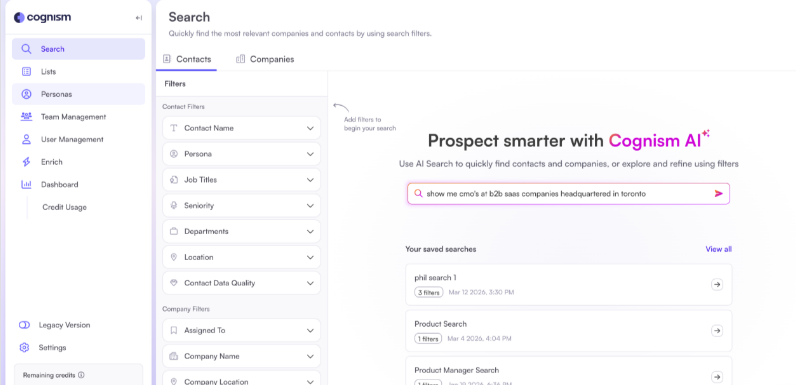
Cognism is a data-only contact provider with strong EU coverage and a compliance-first posture. It serves teams selling into EMEA who prioritize consent handling and regional depth. It is positioned as a contact database, thin on workflow or agent integration.
Core Services
- 📇 EU-focused contact database with mobile numbers.
- 🛡️ Compliance and consent handling for European data.
- 🔗 CRM integrations for routing contacts.
Metrics compared on
- ⚙️ Codex integration path: Integrations and CRM sync, but a data-only model with limited agent fit.
- 📊 Data coverage: Strong in EMEA, with reported gaps in US and APAC.
- ✅ Verified match rate: Reviewers report mobile accuracy below the advertised coverage.
- 💰 Cost per fully enriched contact: Bundled into annual contracts, pricing not published.
- 🗂️ Data types: Contacts, mobiles, firmographics, and EU compliance flags.
Why Companies Consider Cognism
The draw is European coverage and compliance. If you sell into the EU and need consent-handled contact data, Cognism is a natural shortlist entry.
The structural trade-off is the data-only model. It is thin on workflow, agent integration, and enrichment depth, so you still need another tool to act on the data. Vibe’s contrast is aggregator-of-aggregators coverage instead of a region-skewed single database, no annual lock-in, and an agent that acts on the data rather than handing you a contacts list to route elsewhere.
Ideal Customer Profile
- 🌍 Teams selling primarily into EMEA.
- 🛡️ Buyers who prioritize GDPR-aligned consent handling.
- 📞 SDR teams that lean on mobile dialing in Europe.
Commercial Model
Annual contracts with pricing that is not publicly disclosed. Some reviewers report being signed to 12-month terms despite quarterly framing in the sales conversation.
When to Shortlist
- ✅ Your primary market is EMEA.
- ✅ Compliance and consent handling are non-negotiable.
- ✅ You have a separate tool to act on the contacts.
When Not to Shortlist
- ❌ You need strong US or APAC coverage.
- ❌ You want usage-based pricing without annual lock-in.
- ❌ You want the data layer to drive agent action, not just supply a list.
Customer Reviews
“Poor data quality, no direct mobile numbers. Numbers either wrong or returns US HQ number even when searching European offices. Not worth the money. Waste of time in SDR workflow.”
“Data is really limited and generally poor quality. Claims 90% mobile coverage in sales process but doesn’t deliver… Diamond Verified mobiles… are less than 10%.”
These are tough reviews, so here is the balanced read. Cognism’s EU compliance posture is real and valuable for European teams. The accuracy gap reviewers describe is what a single regional database produces, which is exactly why a multi-source waterfall exists.
1.7 Clearbit: Best for real-time firmographic enrichment inside a marketing stack [toc=1.7 Clearbit]
Overview
Clearbit is a real-time enrichment provider focused on firmographic data, now part of HubSpot’s ecosystem. It serves marketing and growth teams that want to enrich inbound leads and reveal which accounts visit their site. It sits on the data-API side of the category, strongest when wired into an existing stack.
Core Services
- 🔌 Enrichment APIs that add job-title and firmographic data to new leads.
- 👁️ Reveal, which identifies anonymous account website visits.
- 🧩 Salesforce widget and CRM record creation.
- 📇 Personal and company email identification.
Metrics compared on
- ⚙️ Codex integration path: Direct REST API, easy to call but built for app integration, not agent action.
- 📊 Data coverage: Good for firmographics; reviewers note a smaller contact database.
- ✅ Verified match rate: Reviewers report data is not always accurate and refreshes too infrequently.
- 💰 Cost per fully enriched contact: Self-service tiers, then a jump to larger plans.
- 🗂️ Data types: Firmographics, job titles, company data, and web-visit signals.
Why Companies Consider Clearbit
The pull is real-time firmographic enrichment inside tools teams already use, especially Salesforce and HubSpot. For qualification and routing of inbound leads, it is a clean, API-friendly fit.
The structural trade-off is depth and refresh. Reviewers report company data that does not refresh often enough, accuracy that needs LinkedIn double-checking, and a hard jump once you pass self-service limits. Vibe’s contrast is a multi-source waterfall built for match rate, reached by an agent rather than wired field by field into a marketing app.
Ideal Customer Profile
- 🧑💼 Marketing and growth teams enriching inbound leads.
- 🔗 Heavy Salesforce or HubSpot users.
- 📊 Teams that need firmographics more than deep contact data.
Commercial Model
Self-service pricing for small to medium volumes, then a jump to larger plans once you exceed the self-service limit. Confirm current tiers and any annual terms before committing.
When to Shortlist
- ✅ You enrich inbound leads in real time inside a CRM.
- ✅ Firmographic data is your primary need.
- ✅ You want web-visit identification via Reveal.
When Not to Shortlist
- ❌ You need deep, high-coverage contact data.
- ❌ You need frequent data refresh for outbound.
- ⚠️ You expect smooth scaling past the self-service tier.
Customer Reviews
“Easy-to-use APIs. Good self-service pricing for small-medium volumes. Good database size. Identifies personal emails.”
Dan T. Clearbit G2 Verified Review
“Company data doesn’t refresh often enough. Only 20% of known contacts could be found, including people at companies for 1 year.”
Verified User, Internet Clearbit G2 Verified Review
“Not always accurate. Needs more frequent refresh. Lacks robust integrations to easily action on data.”
Brian Y., Head of Marketing Clearbit G2 Verified Review
In fairness, Clearbit’s APIs are genuinely easy to use, as the first review shows. The refresh and coverage gaps are structural to a single-source firmographic model, not a support failing.
1.8 SyncGTM: Best for a fallback MCP waterfall when a segment keeps coming back empty [toc=1.8 SyncGTM]
Overview
SyncGTM is a hosted MCP that routes each lookup across 20+ enrichment vendors instead of running its own data backbone, so a miss at one provider automatically retries the next. It connects via OAuth browser sign-in, documented at docs.syncgtm.com. It is a routing layer, not a workflow or agent platform.
Core Services
- 🌊 Hosted MCP waterfall across 20+ enrichment vendors.
- 🔧 Roughly 50 tools for lead discovery, person and company enrichment, and 15+ buying-signal types.
- 🧩 40+ integrations including Salesforce, HubSpot, Attio, and Slack.
Metrics compared on
- ⚙️ Codex integration path: Native hosted MCP, OAuth sign-in, no long-lived token to provision.
- 📊 Data coverage: 300M+ companies, 600M+ profiles (vendor-stated); not independently benchmarked.
- ✅ Verified match rate: Not independently benchmarked; coverage figures are vendor-stated.
- 💰 Cost per fully enriched contact: Credit-metered, billed only on a valid record, no free tier.
- 🗂️ Data types: Company and person enrichment plus 15+ real-time buying-signal types.
Why Companies Consider SyncGTM
The reason is coverage breadth by aggregation. If a specific ICP segment keeps coming back empty from a single vendor, SyncGTM’s waterfall automatically tries the next provider before the agent gives up on the row.
The structural trade-off is that it has no proprietary data backbone, so it inherits whatever gaps its upstream vendors have, and it is a young vendor with thin third-party review volume and no independent match-rate benchmark. Vibe’s contrast is a single MCP reached by an agent through natural language, backed by its own contact data layer rather than a routing layer over other providers.
Ideal Customer Profile
- 👤 Teams that already run a primary enrichment source and want a fallback for empty rows.
- 🧑💻 Builders comfortable with credit-metered, no-free-tier billing.
- 📦 Use cases where an independently benchmarked match rate is not a requirement.
Commercial Model
Published self-serve subscription tiers: Solo $49/month, Growth $99/month, Pro $249/month, Business $649/month, Enterprise custom. No free tier. Credits roll over and never expire; top-ups run $0.05/credit.
When to Shortlist
- ✅ A segment of your list keeps coming back empty from your primary vendor.
- ✅ You want waterfall retries surfaced as native MCP tool calls.
- ✅ You are comfortable with credit-metered, no-free-tier billing.
When Not to Shortlist
- ❌ You need an independently benchmarked match rate, not vendor-stated coverage.
- ❌ You want one unified dataset instead of a routing layer across upstream providers.
- ❌ You need a mature third-party review base to validate the vendor against.
I will not manufacture a quote. SyncGTM is a young vendor with thin third-party review volume as of this writing, so no independently verified review is surfaced here.
How We Evaluated These Providers
- 📚 Primary sources consulted: OpenAI Codex MCP documentation for integration paths, the official MCP specification for how agent access differs from an API, Vibe Prospecting and Explorium documentation for product facts, and first-party review platforms (G2, Capterra, and Trustpilot) for verified user patterns.
- 🎯 Criteria selected for this title: Codex integration path, data coverage, verified match rate, cost per fully enriched contact, and data types, because these are the factors that change a revenue engineer’s build.
- 🧹 Criteria de-prioritized: Brand recognition, seat counts, and UI polish, since they do not affect whether your agent gets clean, deliverable data.
- ⚠️ Data gaps: No verified reviews were available in the provided source set for ZoomInfo, so that review block was left blank rather than filled with manufactured quotes. SyncGTM is a young vendor with thin third-party review volume, so its review block is blank for the same reason.
Which Provider Should You Shortlist?
- Solo operator or founder doing your own outbound: Start with Vibe Prospecting’s free trial inside Claude, since the agent runs filtering and enrichment without a build.
- SDR or RevOps team frustrated with manual list-building: Test Vibe Prospecting against Apollo, because the agent does the vetting Apollo leaves to you.
- Engineer who wants raw data to build against: Shortlist People Data Labs, and consider Explorium’s API directly if you want that rigid contract.
- Ops team that wants maximum workflow control: Pilot Clay, accepting the learning curve and credit-burn trade-off.
- Enterprise needing broad coverage and intent: Run ZoomInfo through procurement if you can absorb an annual contract.
- EMEA-focused, compliance-first team: Evaluate Cognism for European coverage, paired with a tool to act on the data.
- Marketing team enriching inbound in a CRM: Trial Clearbit for real-time lead enrichment.
One closing thought, from someone who has watched a lot of these sessions run. The providers that win for Codex are not the ones with the biggest database. They are the ones that let your agent do the access, filter, and enrich grunt work, so you spend your time on who to target and what to say. If you would rather hand that work to an agent than wire three APIs by hand, you would be missing out not knowing Vibe Prospecting exists.
Q2: What is enrichment "for Codex," and how do you connect an MCP server or API? [toc=2. Connecting MCP and API]
Enrichment for Codex means pulling, filtering, and completing company and contact records inside your coding agent. An API is a rigid input-to-output contract you engineer against. MCP, the Model Context Protocol, is the "USB port for AI" that lets Codex call data tools by intent. To connect one, add the server with codex mcp add <name> –url <url> or edit ~/.codex/config.toml, authenticate with an API key or OAuth, then ask in plain language.
🧠 What "enrichment in the agent" actually means
Picture a record with a name and a company, nothing else. Enrichment fills the gaps: the work email, the phone, the title, and the firmographics.
Doing that inside Codex means the agent fetches and completes records in the same window where you code. You stop exporting CSVs and switching tools. The data comes to the work, which is the core promise of modern data enrichment.
🔌 API versus MCP, the distinction that matters
Here is the part the category glosses over. With an API, every call needs a structured, engineered path. You define each input and each output by hand, for every case.
With an MCP attached to an agent, input can arrive by any path, and output can come back by any path. I might be biased after six years building this layer, but that is the real unlock. The rigid contract is replaced by language-mediated access, so the integration tax mostly disappears.
A useful parallel: hand-wired API integrations are like soldering a cable for every device. MCP is the universal port you plug into once.
How to connect enrichment to Codex
- ➕ Add the server: Run codex mcp add <name> –url <url>, or add the server block to ~/.codex/config.toml. Codex shares this config across the CLI and the IDE.
- 🔑 Authenticate: Provide an API key or complete the OAuth flow the server expects. For teams juggling many servers, a managed MCP layer handles built-in auth, so you skip per-call key management.
- 💬 Make the first call: Ask in natural language, like “enrich these 20 companies with a verified work email and phone.” The agent calls the tool and returns the records.
⚙️ A setup note and an honest caveat
One small efficiency trick: put your variables at the bottom of long prompts. The static top stays cached, which trims token cost on repeated runs.
Now the honest part. Vibe Prospecting exists in three forms: an MCP connector for Claude Code, a chat UI, and an embeddable MCP for existing pipelines. Credits apply to Claude today, not ChatGPT or Codex. So for Codex specifically, the path is the embeddable MCP and direct data access that any MCP-compatible agent can call.
🧩 Why this changes the work, not just the wiring
When we first wired Vibe Prospecting into Claude as a connector, the thing that stood out was not speed. It was that the agent ran the filtering and the fit judgment in one pass, from one instruction.
That is the difference between access and action. The MCP gives the agent agent-ready access. Explorium provides the connective infrastructure underneath. The agent does the reasoning, and you keep the decisions that need a human.
Q3: What makes one provider better than another: match rate, data decay, waterfall enrichment, and credit cost? [toc=3. Match Rate and Cost]
Database size is a vanity metric. Verified match rate and price per deliverable contact decide outcomes. B2B contact data ages fast, so a big static export goes stale within a year. Waterfall enrichment, cycling through providers until a record is verified, maximizes deliverability. Compare on cost per fully enriched contact: Vibe Prospecting charges 8 credits for a prospect plus email plus phone.
📉 Why match rate beats database size
Here is the felt sense from running this work. A list of 100,000 records means nothing if a quarter of the emails bounce.
The standard read chases coverage. I think that gets it backwards. What you actually want is a high rate of deliverable, triple-verified contacts. A smaller, accurate list beats a huge, stale one every time, which is why verified B2B contact data matters more than raw counts.
🌊 What waterfall enrichment is, plainly
Waterfall enrichment means trying one source, and if it misses, trying the next, until a contact is verified. Think of it like a credit bureau pulling from many sources instead of betting on one.
We built Explorium as an aggregator of aggregators, sourcing from 50+ providers, so that waterfall is baked into the data layer. You do not stitch providers together by hand. The agent gets one clean answer, and you can see how this enrichment pipeline comes together.
How to normalize the cost comparison
The trick is to price one fully enriched contact, prospect plus email plus phone, then compare. Headline credit numbers hide the real cost.
<caption>Cost Per Fully Enriched Contact by Provider</caption>
| Provider | Entry / trial | Cost per fully enriched contact | Terms to watch |
|---|---|---|---|
| Vibe Prospecting | From $19/mo, 400-credit trial valid 90 days | 8 credits per prospect, email, and phone | Credits valid 12 months, no rollover, Claude-only today |
| People Data Labs | Usage-based API | Priced per record | Billing complaints reported by users |
| Clay | Credit-based | Per-row, can vary from stated amount | Failed lookups still burn credits |
| ZoomInfo | Annual contract | Bundled into seats | Procurement, annual lock-in |
💸 The hidden-cost trap, and one honest caveat
Clay reviewers describe the sharpest version of this problem.
“Per-row credit cost can vary 100% from stated amounts (e.g., stated 11 credits/row, actual 25). Contact data quality varies wildly, feels like a black box.”
Verified User, IT Services Clay G2 Verified Review
“Credit system is broken. Pricing is broken. Not fully transparent with rollover limit.”
Raphael A., Marketing Lead Clay G2 Verified Review
I will hold myself to the same standard. Vibe’s usage-based credits can burn fast on a large enriched export. So validate with stats and a sample before you export at volume. That is the responsible way to spend real money, and you can review the credit details first.
Q4: How do the 8 providers compare for Codex? The per-vendor deep dive [toc=4. Per-Vendor Deep Dive]
Each provider fits a different Codex job. People Data Labs serves raw record enrichment, and SyncGTM serves as a fallback waterfall across other vendors. Apollo is all-in-one outbound. Clay is manual waterfall. ZoomInfo and Cognism cover enterprise and EMEA. Clearbit handles real-time firmographics. Vibe Prospecting is the agent-native layer that turns Explorium’s data into finished work inside the agent.
🧩 The quick read on each
- ⭐ Vibe Prospecting: Agent-native MCP on Explorium’s 50+ source layer. Reaches Codex via embeddable MCP. The agent runs both filters; you keep the judgment. Not for raw-API builders or one-off lookups.
- People Data Labs: Raw data API. Direct REST for Codex. ❌ No dashboard or workflow; you build everything. Best when you genuinely want raw records.
- Apollo: All-in-one UI plus API. The human operates every step. ⚠️ Reviewers report accuracy below advertised and meaningful bounce. Best as a data source, not a sending engine.
- Clay: Flexible workflow builder. Powerful, but you become the workflow engineer, with a learning curve and credit burn. Best for ops teams with time.
- ZoomInfo: Enterprise platform. Direct API. ❌ Annual contracts and procurement, no usage-based start. Best for large teams that can absorb that.
- Cognism: EU-focused, data-only. Strong compliance. ⚠️ Reviewers report US/APAC gaps and mobile accuracy below claims. Best for EMEA, paired with a tool to act.
- Clearbit: Real-time firmographic API in a CRM. ⚠️ Reviewers note infrequent refresh and thinner contact data. Best for inbound enrichment.
- SyncGTM: Fallback MCP waterfall across 20+ vendors. Native hosted MCP. ❌ No free tier and no independent match-rate benchmark. Best for backfilling gaps left by a primary vendor.
🔍 The structural pattern underneath
Across these eight, the trade-offs are not bugs. They are permanent design choices.
Apollo keeps the human as the operator. Clay makes you the engineer. ZoomInfo and Cognism sell data on a contract, thin on action. PDL hands you records to build around, and SyncGTM hands you a waterfall across other vendors’ records. None collapse access, filter, and act into one agent-driven motion.
“What I like best is the ability to use natural language logic instead of rigid filters.”
Tristan W. Vibe Prospecting G2 Verified Review
🧠 The glue factor, and where I land
The thing Vibe Prospecting does that the others structurally cannot is act as the glue. The agent re-researches a company before outreach, instead of working a stale export.
I could be wrong on the edges, but the operating model has changed. The winners for Codex are not the biggest databases. They are the layers that let your agent do the grunt work, so you spend time on who to target and what to say, the heart of GTM engineering.
Q5: What does an end-to-end GTM workflow look like inside Codex, and which buying signals should the agent act on? [toc=5. End-to-End GTM Workflow]
Inside Codex, a revenue engineer describes the target in plain language. The agent searches the data layer, runs waterfall enrichment, scores against a signal stack, and pushes a verified list to the CRM in one session. The strongest triggers are stack signals (funding, leadership changes, and hiring), plus technographic shifts and intent signals like pricing-page visits. The agent acts on behavior, not just fit.
🎬 The before-state, from a real operator
Take Maya, a RevOps lead I will use as a stand-in. Her old motion ran on a three-day data lag and a manual CSV export. She pulled a list, read every row, and bucketed by hand before a single email went out.
That hand-vetting was the tax. The hard filter (location, size, and industry) was only the floor. The real cost was the thousand small judgments stacked on top, which is exactly the work a sound ICP prioritization process is meant to absorb.
⚙️ The same motion inside the agent
Now Maya states the objective in Codex. The agent searches, enriches, scores, and returns a verified list in the same session.
I think of the split as a 10/80/10 model. The human spends 10% framing the target, the agent does the 80% of grunt work, and the human spends the last 10% on judgment. When we first watched an agent run the hard filter and the fit filter in one pass, that collapse of the middle 80% was the whole point, and it is the same logic behind filtering and enriching results in one motion.
The signal stack the agent should trigger on
A signal stack is the set of behaviors that say a company is in motion now, not just that it fits.
- 💰 Stack signals: Funding, leadership changes, and hiring spikes. Together they predict the next 90 days of chaos and budget, which is why funding data is so predictive.
- 🛠️ Technographic shifts: A move like Salesforce to HubSpot signals a buying window, the kind of change technographic data surfaces.
- 📈 Intent signals: Pricing-page visits and review-site activity show active research, the core of B2B intent data.
🔁 Why monitoring beats one-time acquisition
Here is the part the category underplays. The old tools hand you a static snapshot. An agent can stand watch and update a record the moment a prospect changes role.
I might be slightly ahead of the curve here, but intelligence should come before automation. You point the agent at a book of business, and it surfaces expansion openings and churn risk on an ongoing basis. That is living data, not a stale export, and it reflects how an agent can use AI across the funnel.
The same three patterns, sales prospecting, recruiting, and investment research, all run on this one motion. The agent does discovery and vetting. You keep the call on who to pursue.
Q6: What do operators get wrong when automating enrichment in an agent, and how do you stay compliant? [toc=6. Automation Mistakes and Compliance]
The biggest mistake is building automation before intelligence. Automating a broken playbook just scales the failure faster. Watch for chasing the "best" agent when consistency beats brilliance, the AI "ick" from too-perfect copy, and giving up on missing emails. On compliance, log the logic behind every agent targeting decision, and keep a human as the accountable final check.
❌ Myth: automate first, fix later
Here is what I got wrong early. We tried handing a process to automation before the manual version reliably worked.
Proof before plugins. Never give a Codex skill a process until the manual playbook earns its keep. Automating a weak motion does not save you, it multiplies the weakness, a lesson echoed in how we build no-code enrichment pipelines.
⚠️ Myth: the smartest agent wins
The standard read chases the cleverest model. I think that gets it backwards.
Consistency beats brilliance for repeatable work. A reliable B-plus run every time beats a dazzling run you cannot reproduce. And watch the AI "ick," copy so flawless it reads as machine-made. Operators tune out instantly.
📧 Myth: a missing email is a dead end
A blank email field feels like failure. It is often an advantage.
A gap tells the agent where to run the next waterfall pass, cycling sources until a record verifies. That is the heart of effective data enrichment. Clay reviewers know the flip side of getting this wrong.
“New users can never figure out what to do. High chance of credits getting misused for wrong operations.”
Qais B., Growth Strategist Clay G2 Verified Review
“Accuracy for target demographic exceptionally below acceptable. Research-on-demand couldn’t acquire info multiple times but still charged credits.”
Lorri F., Business Development SalesIntel G2 Verified Review
🛡️ How to stay compliant and accountable
Log the reasoning behind each targeting decision. Clear documentation of your logic supports EU AI Act expectations.
Because we built Explorium as an aggregator of aggregators, you can trace which of 50+ sources a record came from. That traceability makes an audit trail defensible, and it rests on our data security posture. A human stays the accountable final sniff test, always. This is general guidance, not legal advice.
Q7: Which enrichment option should you choose for your Codex setup? [toc=7. Choosing Your Option]
Choose by surface and maturity. A solo operator who wants to ask in chat should start on a UI surface. Someone who lives inside an agent should use an MCP connector. A team that would otherwise engineer against a data API should use an embeddable MCP. For Codex specifically, the agent-native path turns commodity data into finished lists. Start with the 400-credit, 90-day free trial.
🧭 Match the surface to how you work
The honest read is that data access is now a commodity. Anyone can reach the records. The leverage is letting the agent do the grunt work, so you own targeting, messaging, positioning, and the offer, which is the core promise of Vibe Prospecting.
<caption>Matching Your Codex Surface to How You Work</caption>
| Buyer tier | What fits | Why |
|---|---|---|
| Solo operators and founders | Chat UI | Ask in plain language, no setup |
| Sales and RevOps in an agent | MCP connector | The agent runs filtering and vetting in-session |
| Technical and data teams | Embeddable MCP | API-grade access without the API-grade build |
If you want to see how this maps to your motion, the MCP integration path and the broader sales use case both lay out where each surface fits.
💬 Where my head is right now
One honest caveat before you start: credits apply to Claude today, not ChatGPT. The 400-credit trial is valid 90 days, and a fully enriched contact costs 8 credits. Review the pricing details before you scale.
So here is the question I am sitting with, and I would genuinely like your answer. If the agent can do the access, filter, and enrich work, what is the highest-judgment thing you would spend that reclaimed time on? Tell us what you are building.
FAQs


