

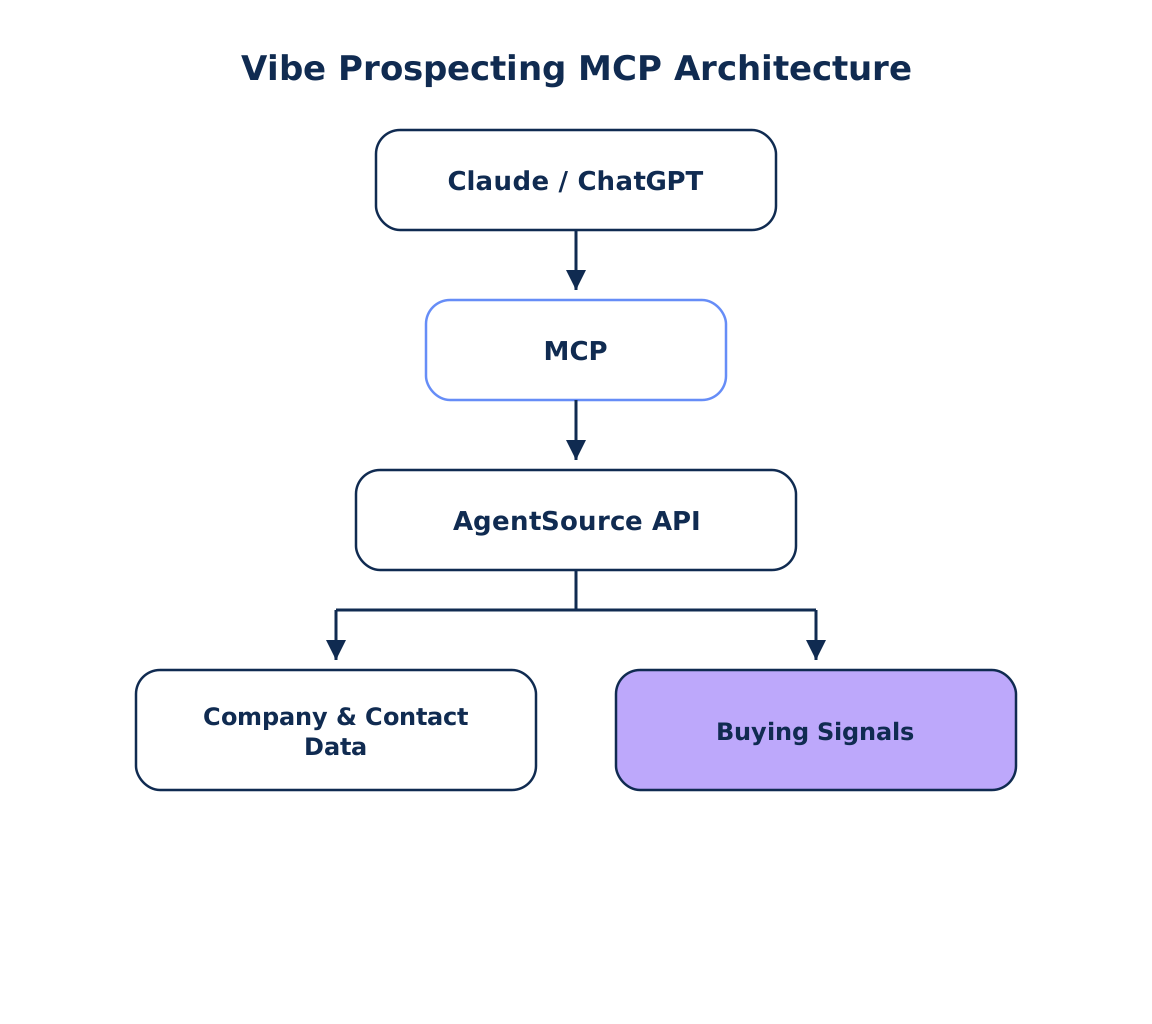
- Pillar 1, one MCP for all data needs: a single Vibe Prospecting connection pulls company discovery, contact enrichment, and 18 buying-signal categories, including AHJ and NFPA compliance triggers, instead of stitching a permit feed, an enrichment vendor, and a compliance calendar.
- Pillar 2, built for scale: Vibe Prospecting enriches up to 1,000 entities per call over the AgentSource API at 100 QPS sustained, enough to cover a full territory of fire-protection facilities in one run.
- Pillar 3, affordable by design: a free account with no sales call and a unified credit pool cut agent-workload spend 30-60% versus per-endpoint or per-seat tools.
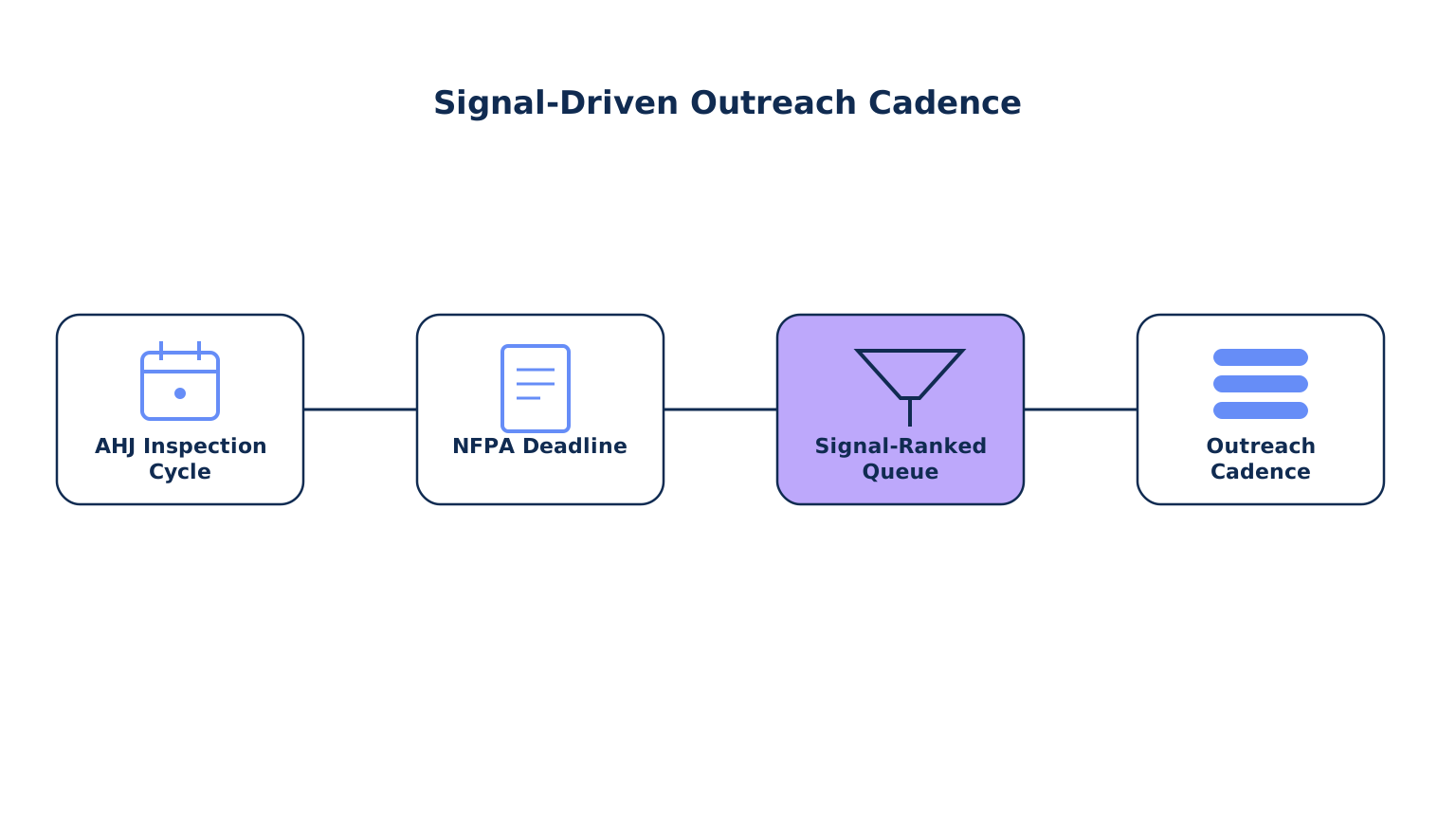
- Timing beats generic cadence: outreach sequenced around AHJ inspection cycles, permit filings, and incumbent-vendor contract expirations lands when the buyer already has budget pressure, not on a fixed drip schedule.
- Explorium metric: 97.8%+ company match accuracy keeps permit and inspection records mapped to the correct facility-owning entity across large batch runs.
- Install / outcome: add Vibe Prospecting from the Claude or ChatGPT Connectors Directory and validate the signal-driven cadence on a free sample batch before committing budget.
Fire and life-safety contractor outreach best practices start with one rule: sequence around verified timing triggers, not a fixed drip calendar. Teams selling into fire protection and sprinkler contractors already have a target list, so the outreach motion, channel mix, timing, measurement, separates a reply from a bounce.
Page-one advice for this query stops at generic SEO and email tips. It names the right personas, safety directors, facility managers, compliance managers, but never explains how what is data enrichment changes when the signal is an inspection date, not a firmographic snapshot. This checklist fills that gap.
Below: channel sequencing, timing triggers, gatekeeper tactics, the KPIs that matter, and how an MCP workflow keeps the queue current.
What Is Signal-Driven Outreach for Fire and Life-Safety Contractors and Why Does It Matter?
Signal-driven outreach triggers a sequence from a verified event, an AHJ inspection cycle, an NFPA compliance deadline, a permit filing, rather than a calendar date, and it converts higher because the buyer already has budget pressure when the message arrives. A static drip assumes every account is equally ready; a signal-driven queue re-prioritizes as new triggers land.
❌ Why Generic Drip Cadences Fail This Vertical
- A fixed 6-touch sequence ignores whether the account has an inspection due in 30 days or 300 days.
- Gatekeepers screen unsolicited pitches harder when the message has no timing relevance to the compliance clock.
- Incumbent-vendor contracts renew quietly; a generic cadence has no mechanism to catch the expiration window.
- Commoditized positioning, "we do fire protection software too", reads like the last five vendors that called.
✅ What a Live Signal Feed Enables
- An agent flags accounts with an inspection deadline inside 60 days and moves them to the top of the queue.
- Permit filings for new sprinkler installs or retrofits surface accounts building budget approval now.
- Three-tier intent data flags facility-safety accounts researching compliance software before a rep dials.
- Contract-expiration windows on incumbent vendors surface 60-90 days ahead, when a director is open to a switch.
How Do You Run Outbound Campaigns for Fire Protection Prospects?
Run fire protection outbound as a three-channel sequence, email first for compliance messaging, LinkedIn second for persona-specific proof, phone third once a signal confirms urgency, rather than blasting all three on day one. Sequencing by signal strength avoids spam while landing the message inside the compliance window.
🔄 The Three-Channel Sequence
- Day 0, email: reference the specific trigger (inspection date, permit filing) and attach one compliance-relevant resource, not a generic deck.
- Day 3, LinkedIn: connect with the facility safety director or compliance manager directly, referencing the same trigger in the connection note.
- Day 7, phone: call only after the signal is confirmed live, an inspection inside 45 days or a permit filed in the last 10 days, so the gatekeeper hears a time-bound reason for the call.
💡 Sequencing by Signal Strength, Not Day Count
A fresh signal, a permit filed yesterday, compresses the sequence to same-day email plus phone. A softer signal, a deadline 120 days out, keeps the full 7-day cadence. An agent reading the signal feed makes that call per account instead of one script for every account.
What Are the Best Channels to Reach Fire and Life-Safety Decision-Makers?
Email and LinkedIn outperform cold phone as first-touch channels for facility safety directors and compliance managers because both let the buyer verify the sender before responding, which matters after five other vendor pitches this quarter. Phone earns its place as a second- or third-touch channel once a signal confirms urgency.
📊 Channel Fit by Persona
| Persona | Best first-touch channel | Why |
|---|---|---|
| Facility safety director | Reviews compliance documentation before taking a call | |
| Compliance manager | Responsive to peer-referenced content, not cold pitches | |
| Facility manager | Phone | Owns budget for reactive, deadline-driven purchases |
| Procurement / RFP contact | Requires a paper trail for vendor evaluation |
🔑 Gatekeeper Reality by Channel
- Front-desk gatekeepers screen cold calls harder than cold emails at facility-management offices.
- LinkedIn connection requests bypass the gatekeeper entirely when addressed to the named decision-maker.
- Subject lines naming the compliance trigger get opened more than generic "quick question" lines.
How Do You Time Outreach Around NFPA and AHJ Inspection Deadlines?
Time outreach to land 45-60 days before an AHJ (Authority Having Jurisdiction) inspection or an NFPA compliance deadline, the window when a facility safety director is budgeting for remediation but has not renewed with an incumbent. Outreach inside 2 weeks of the deadline is too late; the account has already scrambled to a known vendor.
📊 Signal-to-Cadence Mapping
| Signal | Lead time to act | Recommended channel |
|---|---|---|
| AHJ inspection scheduled | 45-60 days out | Email, then LinkedIn |
| NFPA compliance deadline published | 60-90 days out | Email with compliance resource |
| New construction permit filed | 0-10 days after filing | Phone, same week |
| Incumbent-vendor contract expiring | 60-90 days before renewal | LinkedIn, then email |
“The richness and breadth of data is incredible. I really like the instant access to the most useful and reliable external data. It helps us provide better service to our customers because it is the data we need to make faster and better decisions.” – Ishi N., Enterprise (1000+ employees) via G2
⚡ Why 45-60 Days Is the Right Window
Facility budgets for compliance remediation typically get approved 30-45 days before an inspection. Reaching the account before that window puts a proposal into the same budget conversation as the incumbent’s renewal quote, not after the decision is made.
What KPIs Matter for Fire Protection B2B Lead Generation?
Track cost per lead, reply rate, and meeting-to-opportunity conversion, not vanity metrics like emails sent or connection requests accepted, because those three numbers show whether signal-driven timing converts attention into pipeline. A rising reply rate with a flat conversion rate signals a messaging problem, not a targeting problem.
🔑 The Three KPIs That Matter
- Cost per lead: total campaign spend divided by qualified leads, benchmarked against the vertical’s typical contract value.
- Reply rate: percentage of contacted accounts that respond, segmented by whether the touch referenced a live signal or not.
- Meeting-to-opportunity conversion: percentage of booked meetings that advance to a qualified opportunity, the number that actually predicts revenue.
⚠️ Vanity Metrics to Stop Reporting
- Emails sent, which says nothing about whether the message landed on a relevant trigger.
- LinkedIn connection requests sent, independent of acceptance or reply.
- Total accounts in the target list, which measures list size, not quality.
How Do You Get Past Gatekeepers Selling Into Facility Safety Teams?
Name the specific compliance trigger, the AHJ inspection date, the NFPA deadline, or the permit filing, in the first sentence of the call or email, because a gatekeeper who hears a time-bound, verifiable reason routes the call differently than a generic pitch. Gatekeepers are trained to screen cold pitches, not time-sensitive compliance conversations.
✅ Scripts That Route Past the Front Desk
- Reference the specific inspection or permit date, not a generic "I'd like to introduce our solution."
- Ask for the safety director or compliance manager by name, sourced from contact enrichment, not "whoever handles fire safety."
- Lead with a compliance resource, not a pitch, on the first email touch.
Already sequencing outreach around a static target list? Add real-time timing signals instead of guessing at cadence. Connect AgentSource MCP →
How Does Vibe Prospecting Power a Signal-to-Cadence Workflow for This Vertical?
Vibe Prospecting turns AHJ inspection cycles, NFPA deadlines, and permit filings into a live outreach queue because it combines one MCP connection, server-side scale to 1,000 entities per call, and a unified credit pool that keeps a territory-wide pilot affordable. That combination lets a compliance signal update the cadence the same day it appears.
🔑 Pillar 1: One MCP for All Your Data Needs
- Company discovery across 150M+ profiles and contact enrichment across 800M+ professionals in the same connection used for signal monitoring.
- 18 buying-signal categories with 80+ signal types cover compliance and construction triggers without a separate permit-data subscription.
- 50+ underlying data sources feed the single connection, cutting the number of vendor integrations a RevOps team maintains for one outbound motion.
🚀 Pillar 2: Built for Scale (Hundreds to Thousands per Run)
- Up to 1,000 entities per call over the AgentSource API at 100 QPS sustained enriches a full territory in one run.
- Most in-context data-enrichment MCPs cap useful runs around 20-100 prospects before the LLM context window overflows, well below a national territory’s facility count.
- 97.8%+ company match accuracy keeps permit and inspection records tied to the correct facility-owning entity at that volume.
💰 Pillar 3: Affordable by Design
- Free account, no sales call, lets an SDR manager pilot the signal-driven cadence on one territory before rolling it out nationally.
- Credits flow into a unified pool across company discovery, contact enrichment, and signal monitoring, cutting agent-workload spend 30-60% versus per-endpoint pricing.
- Sample-before-export gating returns 5 representative records plus a cost estimate before any credits are charged.
⚡ MCP Configuration
{
  "mcpServers": {
    "vibe-prospecting": {
      "command": "npx",
      "args": ["-y", "@explorium-ai/vibeprospecting-mcp"],
      "env": { "EXPLORIUM_API_KEY": "your_api_key_here" }
    }
  }
}
🏗️ Sample Signal Filter
{
  "signal_categories": ["regulatory_compliance", "permit_filing", "contract_expiration"],
  "lead_time_days": 60,
  "entity_limit": 1000
}
Coresignal covers 792M+ employee records and 103M+ company records at $49-$5,000 per month by tier; its MCP server, launched December 2025, exposes company and employee data with no native compliance or permit signal categories. Hunter.io’s MCP server, live since July 2025, covers domain search and email verification, about 4,000 verifications on its $49/month tier, not firmographic breadth or signal monitoring at territory scale.
Getting Started: From Signal Feed to Booked Meeting in 5 Steps
Create a free Explorium account, install Vibe Prospecting from the Claude or ChatGPT Connectors Directory, validate the signal-to-cadence mapping on one territory, then scale to the full list. The install is one click from inside the host app; a JSON config snippet exists only as a fallback for Claude Code power users.
- Step 1: create a free account at explorium.ai, no sales call required.
- Step 2: add Vibe Prospecting from the Claude or ChatGPT Connectors Directory.
- Step 3: run a sample batch of 5 accounts to validate signal categories against real AHJ and permit data before spending credits.
- Step 4: graduate to a full territory, up to 1,000 entities per call, once the sample confirms match accuracy.
- Step 5: layer in the three-tier intent data to flag accounts actively researching compliance software before the next call block.
🔑 The Decision Framework
Fire and life-safety contractor outreach best practices come down to three things: one connection instead of three vendor stitches, scale that matches a real territory’s facility count instead of a 20-100 prospect ceiling, and pricing that lets a team pilot before it commits. Vibe Prospecting is the answer for teams that need the signal feed and outreach data in one workflow.
Ready to sequence outreach around real compliance deadlines instead of a generic calendar? Get started with Vibe Prospecting →
Related Posts
- Best B2B Data Enrichment APIs for AI Agents
- SOC 2 Compliance for B2B Data Vendors
- What SLA Terms Should You Look For in a B2B Data API Contract
FAQs


