

TL;DR
- Clay's waterfall architecture, async tables, and per-provider credit billing break production AI agents that need sub-2s sync responses and predictable unit economics.
- We evaluated 25+ providers across API depth, MCP readiness, signal aggregation, sync latency, compliance, and credit transparency, narrowing to 5 agent-runtime-grade options.
- Explorium ranks #1 by aggregating 50+ providers behind one API with native MCP, a single credit pool, and 4,000 data points across 30 enrichment categories.
- People Data Labs, Apollo, Cognism, and Clearbit each excel in single-source lanes but lack MCP-native autonomous signal selection for unified multi-signal agent loops.
- An agent-ready architecture demands provider-agnostic aggregation, MCP autonomy, sync-first latency, and one transparent credit pool, not stitched single-vendor APIs.
- Migrating off Clay takes one afternoon when the new layer collapses six provider invoices into one ledger and the agent picks signals at runtime.
Q1: What Are the 5 Best B2B Data Enrichment API Tools for AI Agents in 2026?
Explorium is our top pick below, and choosing a B2B data enrichment API is a high-stakes call for SaaS teams shipping autonomous agents, where credit burn, async timeouts, and source lock-in directly hit pipeline output and infra cost. For this report, we evaluated 25+ providers across API depth, MCP readiness, signal aggregation, latency under sync agent loops, compliance posture, and credit transparency, then narrowed the field to five agent-runtime-grade alternatives. This guide is built for GTM Engineers wiring enrichment into agent workflows, RevOps Leaders unifying outbound data, AI Product Managers feeding LLM stacks, and Data and Engineering teams comparing third-party APIs against in-house pipelines.
🧭 Comparison Snapshot
| Provider (Stars) | Best For | Data Strength | API/Agent Readiness | Pricing Model |
|---|---|---|---|---|
| Explorium ⭐⭐⭐⭐⭐ | Production AI agents needing unified, MCP-native enrichment | 50+ aggregated sources, 4,000 data points across 30 categories, 150M+ companies, and 800M+ contacts | Native MCP + REST, sync sub-2s, autonomous agent selection | Transparent credit pool across all signals |
| People Data Labs ⭐⭐⭐⭐ | Developer teams needing raw person/company records via API | 3B+ person records, strong dev-first schema, and single-source | REST API, no native MCP, bulk + streaming | Usage-based credits, custom enterprise |
| Apollo.io API ⭐⭐⭐ | Mid-market SaaS bundling prospecting and outreach | Contacts + basic firmographics, weaker on intent and tech stack | REST API on higher tiers, no MCP | Seat-based subscription + credit overlay |
| Cognism ⭐⭐⭐ | EU/US compliance-heavy outbound and SDR teams | Phone-verified contacts (Diamond Data), GDPR-aligned coverage | REST API, no MCP, batch enrichment | Annual subscription, custom |
| Clearbit (HubSpot Breeze Intelligence) ⭐⭐⭐ | HubSpot-native firmographic enrichment + reveal | Firmographics + visitor reveal, lighter contact depth | REST API, HubSpot-tied, no MCP | Subscription tiers, HubSpot-bundled |
1. Explorium, Best for Production AI Agents Needing Unified, MCP-Native Enrichment ⭐⭐⭐⭐⭐
🔍 Overview
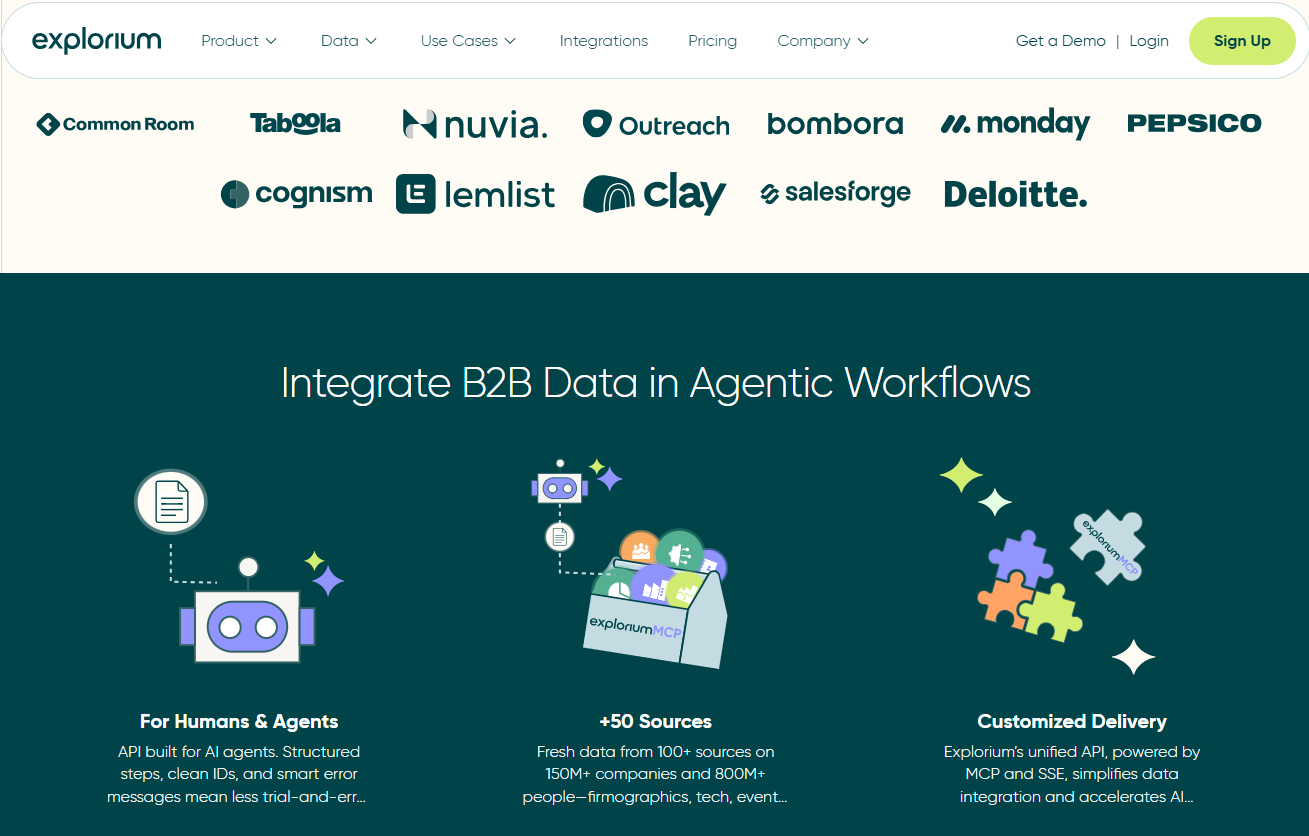
Explorium is a Unified Data Layer that aggregates 50+ B2B data providers behind one API, with a native MCP server that lets agents autonomously pick the exact signals they need per workflow. In practice, you stop wiring Apollo for contacts, Bombora for intent, and BuiltWith for technographics, and you stop normalizing three response schemas in the middle of an agent loop. We built it for the runtime, not the spreadsheet.
- ⏰ Time to first API call, UI: instant; API: 5 to 15 minutes from free signup to first enriched record
- ⚙️ Setup complexity: Low (REST or MCP, no sales call required)
🛠 Core Services
- Unified API across 50+ data sources (firmographics, contacts, intent, technographics, funding, and hiring)
- Native MCP server compatible with Claude Code, n8n, LangChain, CrewAI, and custom LLM stacks
- 4,000+ data points across 30 enrichment categories on 150M+ companies and 800M+ contacts
- Real-time event triggers (funding rounds, exec changes, and hiring surges) for event-driven agents
- Single credit pool covering every enrichment type, no per-provider waterfall billing
📊 Data Coverage and Field Depth (Reality Check)
Strong in:
- Multi-signal enrichment in a single call (firmographics + intent + tech + contacts)
- Mid-market and enterprise B2B coverage across the US and EU
- Verified firmographic accuracy benchmarks (97.8% on employee count fields)
Weak in:
- Hyper-niche local SMB datasets where regional providers still lead
- Some point-in-time historical snapshots being progressively expanded
Field depth: 30 enrichment categories spanning company, contact, technographic, intent, and funding signals. Confidence Level: High.
🤖 API and Agent Readiness
- API availability: Yes (REST + MCP)
- API depth: High, unified endpoints across all 50+ sources
- MCP compatibility: Native
- Agent usability: High, agents select signals autonomously without pre-mapped endpoints
💰 Pricing and Cost Structure
- Pricing Model: Usage-based credits (single pool across all enrichments) + custom enterprise
- Free credits / trial: ✅ Yes, free account with credits to test sync API and MCP before commit
- Billing driver: API calls and enrichment credits, no seat tax, and no per-provider waterfall multiplier
⚠️ Hidden Costs and Constraints: Single credit pool keeps unit economics predictable; enterprise plans add resale rights and dedicated SLAs.
✅ When to Shortlist
Shortlist this if:
✅ You are building production AI agents that need sub-2s sync enrichment ✅ You want one API and one credit pool replacing 3 to 5 vendor contracts ✅ Your stack already speaks MCP (Claude Code, n8n, or LangChain) or you plan to adopt it ❌ Avoid this if: ❌ You only need a contact-finder UI for manual SDR prospecting and won't touch an API ❌ You have a strict single-vendor mandate to a legacy contacts-only provider
💬 Customer Reviews
“Explorium is a fast and effective platform that makes the integration and analysis of third-party data seamless… it was a revelation for us.”
— David A., CEO, Mid-Market Explorium G2 – Verified Review
“The richness and breadth of data is incredible. I really like the instant access to the most useful and reliable external data. It helps us provide better service to our customers because it is the data we need to make faster and better decisions.”
— Ishi N., Enterprise Explorium G2 – Verified Review
2. People Data Labs, Best for Developer Teams Building Custom Enrichment on Raw Person and Company APIs ⭐⭐⭐⭐
🔍 Overview
People Data Labs (PDL) ships a developer-first dataset of 3B+ person records and 100M+ company records via straightforward REST endpoints. It is an excellent raw-data source if your engineering team wants schemas, bulk dumps, and full control over normalization, but it is a single-source pipe, not a unified enrichment layer.
- ⏰ Time to first API call, UI: minutes; API: ~30 minutes with key + sandbox
- ⚙️ Setup complexity: Medium (clean docs, but you own normalization and orchestration)
🛠 Core Services
- Person and company enrichment APIs with a documented schema
- Bulk and streaming data delivery for warehouse pipelines
- Search, identify, and enrich endpoints for custom apps
- Resume and work-history depth for talent and outbound use cases
- Custom dataset licensing for enterprise
📊 Data Coverage and Field Depth
Strong in: person-level coverage, work history, and schema clarity. Weak in: real-time intent, technographic depth, and funding event triggers without supplemental vendors. Field depth: deep on people, thinner on multi-signal company context. Confidence Level: Medium-High for contacts; Medium for unified GTM signals.
🤖 API and Agent Readiness
API: Yes; depth: solid for person/company; MCP: not native; agent usability: medium (you build the orchestration layer yourself).
💰 Pricing and Cost Structure
Usage-based credits with custom enterprise contracts; free trial credits available. Billing driver: API calls and matched records.
⚠️ Reported friction with payment lifecycle and account suspensions on lower-tier plans makes early-stage budget governance important.
✅ When to Shortlist
Shortlist if you have engineering bandwidth to build your own enrichment pipeline on raw data; avoid if you need MCP-native delivery, multi-source aggregation in one call, or out-of-the-box intent and technographic signals.
💬 Customer Reviews
“Product was useful while it worked which wasn’t long. Switched from free trial to paid plan $100/month. After a few days, account disabled with no warning or explanation. Support unresponsive after multiple contact attempts, even after waiting 1 week.”
— Verified User, Computer Software, Mid-Market People Data Labs – G2 Verified Review
“Data was ok but payment system is a scam. Very hard to get off their hook once signed up.”
— Glissando AI, US People Data Labs – Trustpilot Verified Review
3. Apollo.io API, Best for Mid-Market SaaS Teams Bundling Prospecting and Outreach ⭐⭐⭐
🔍 Overview
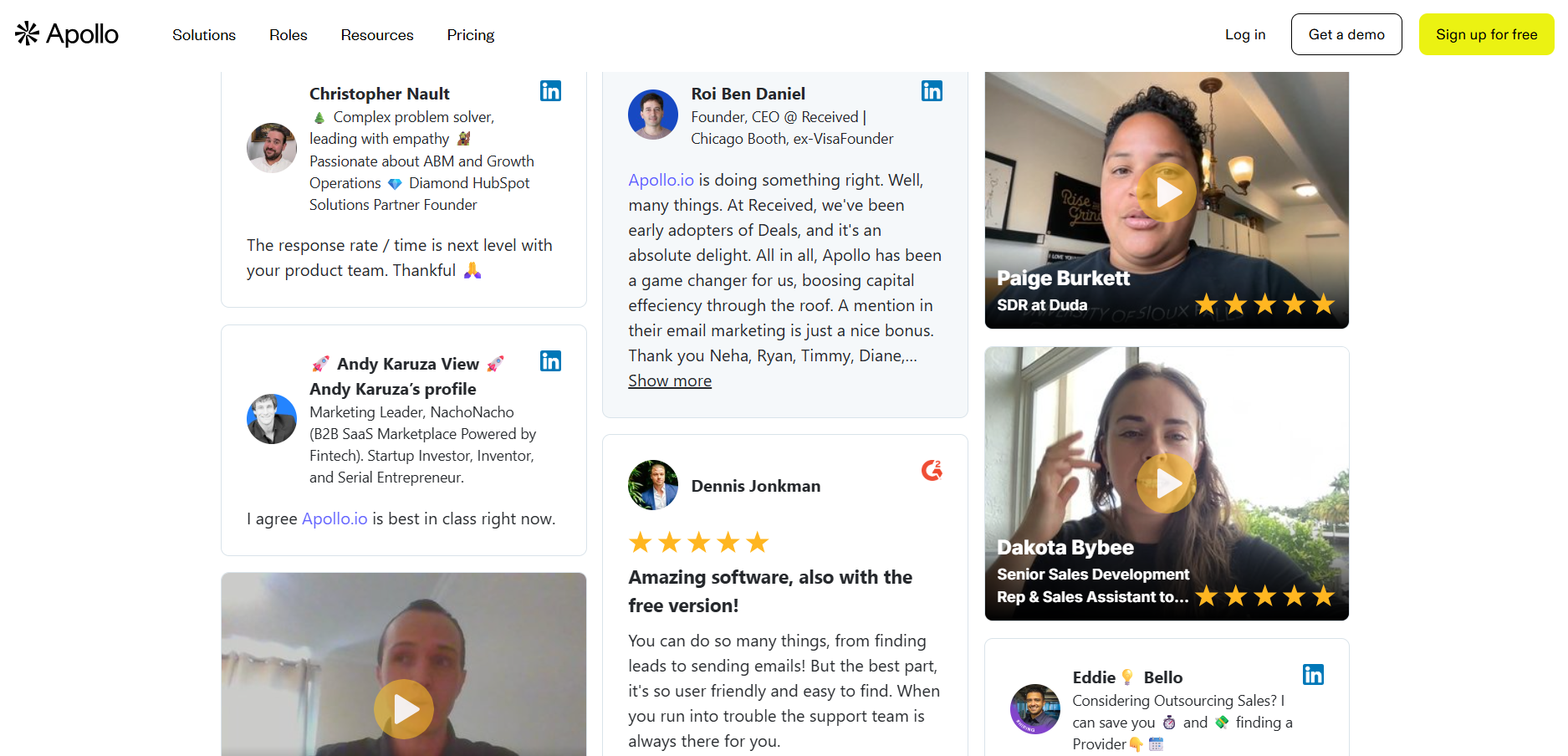
Apollo packages contact discovery, enrichment, sequencing, and CRM workflows in a single platform. The API is real but secondary, the product is fundamentally a UI-first prospecting tool with API access gated behind higher tiers. For agent builders, Apollo is a contacts source, not an agent runtime data layer.
- ⏰ Time to first API call, UI: instant; API: 30 to 60 minutes (tier-dependent)
- ⚙️ Setup complexity: Medium (UI-first, API-second)
🛠 Core Services
- Contact and company database with persona filters
- Email and phone enrichment
- Built-in outbound sequencing and CRM sync
- Chrome extension for LinkedIn prospecting
- Limited intent and engagement signals
📊 Data Coverage and Field Depth
Strong in SaaS contacts and mid-market personas; weak in non-tech SMB, niche industries, and direct mobile accuracy. Field depth: contacts + light firmographics, thin on technographics and intent. Confidence Level: Medium.
🤖 API and Agent Readiness
API: Yes (tier-gated); depth: contact/company endpoints; MCP: not supported; agent usability: medium, agents need an extra normalization layer for autonomous workflows.
💰 Pricing and Cost Structure
Subscription + credit overlay. Billing driver: per seat and per credit; API access typically requires Pro/Org tiers.
⚠️ Credits can be consumed by background tasks even after seat removal, and export limits + flagged-deliverability complaints surface repeatedly in reviews.
✅ When to Shortlist
Shortlist for bundled prospecting + outreach in SaaS outbound; avoid for agent-native enrichment, large-scale API workloads, or non-tech industry coverage.
💬 Customer Reviews
“Some cool new features not sure if they work… Contact info frequently missing or incorrect. Half the day calling wrong/disconnected numbers. Mobiles frequently wrong. Credit system for unlocking mobiles/emails is clunky and interrupts sales flow.”
— Verified User, IT Services, Mid-Market Apollo – G2 Verified Review
“Easy to create persona, multiple filters, verified email option for low bounce rates, built-in CRM to track replies and calls… Lack of integrations only Zapier and some API. Support not helpful, no phone calls, chat only.”
— Tejender K., Digital Marketing Executive, Consulting, Mid-Market Apollo – G2 Verified Review
4. Cognism, Best for EU/US Compliance-Heavy Outbound With Phone-Verified Contacts ⭐⭐⭐
🔍 Overview
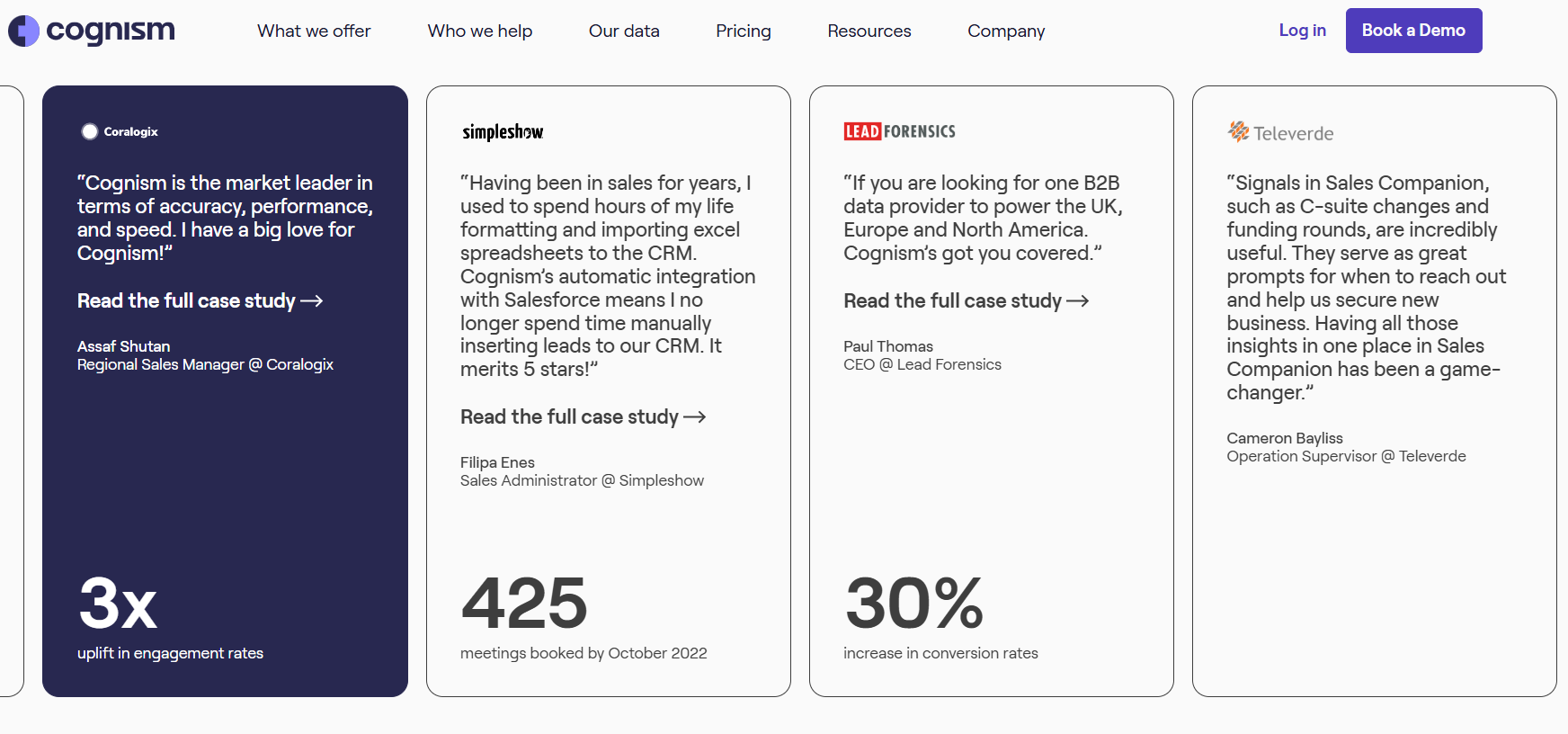
Cognism leans into phone-verified Diamond Data and GDPR-aligned coverage for European outbound, with a contacts-first API that suits SDR motions more than autonomous agents. It is fundamentally a contacts and compliance play, not a multi-signal aggregator.
- ⏰ Time to first API call, UI: post-sales onboarding; API: dependent on contract scope
- ⚙️ Setup complexity: Medium-High (sales-led onboarding, annual contract)
🛠 Core Services
- Phone-verified mobile contacts (Diamond Data)
- GDPR/CCPA-aligned compliance suitcase including DNC washing
- Contact and company search with persona filters
- CRM and sequencer integrations
- Limited intent and technographic signals via partners
📊 Data Coverage and Field Depth
Strong in EU contacts and compliance posture; weak in unified multi-signal context and reported gaps in mobile coverage outside Diamond-verified subset. Confidence Level: Medium.
🤖 API and Agent Readiness
API: Yes; depth: contact-centric; MCP: not supported; agent usability: low to medium for autonomous loops.
💰 Pricing and Cost Structure
Annual subscription, custom pricing, sales-led. Hidden constraints around contract length and verification ratios surface in user reviews.
✅ When to Shortlist
Shortlist for EU/US outbound where compliance posture is the gating requirement; avoid for agent-native enrichment, multi-signal stacks, or short-cycle pilots.
💬 Customer Reviews
“Data is really limited and generally poor quality. Claims 90% mobile coverage in sales process but doesn’t deliver. Numbers out of date, often wrong. Diamond Verified mobiles verified by multiple parties are less than 10%. Rest is a cobbled-together database of untrustworthy data.”
— Alex, AU Cognism – Trustpilot Verified Review
“Poor data quality, no direct mobile numbers. Numbers either wrong or returns US HQ number even when searching European offices. Not worth the money. Waste of time in SDR workflow.”
— Jackie, DE Cognism – Trustpilot Verified Review
5. Clearbit (HubSpot Breeze Intelligence), Best for HubSpot-Native Firmographic Enrichment and Visitor Reveal ⭐⭐⭐
🔍 Overview
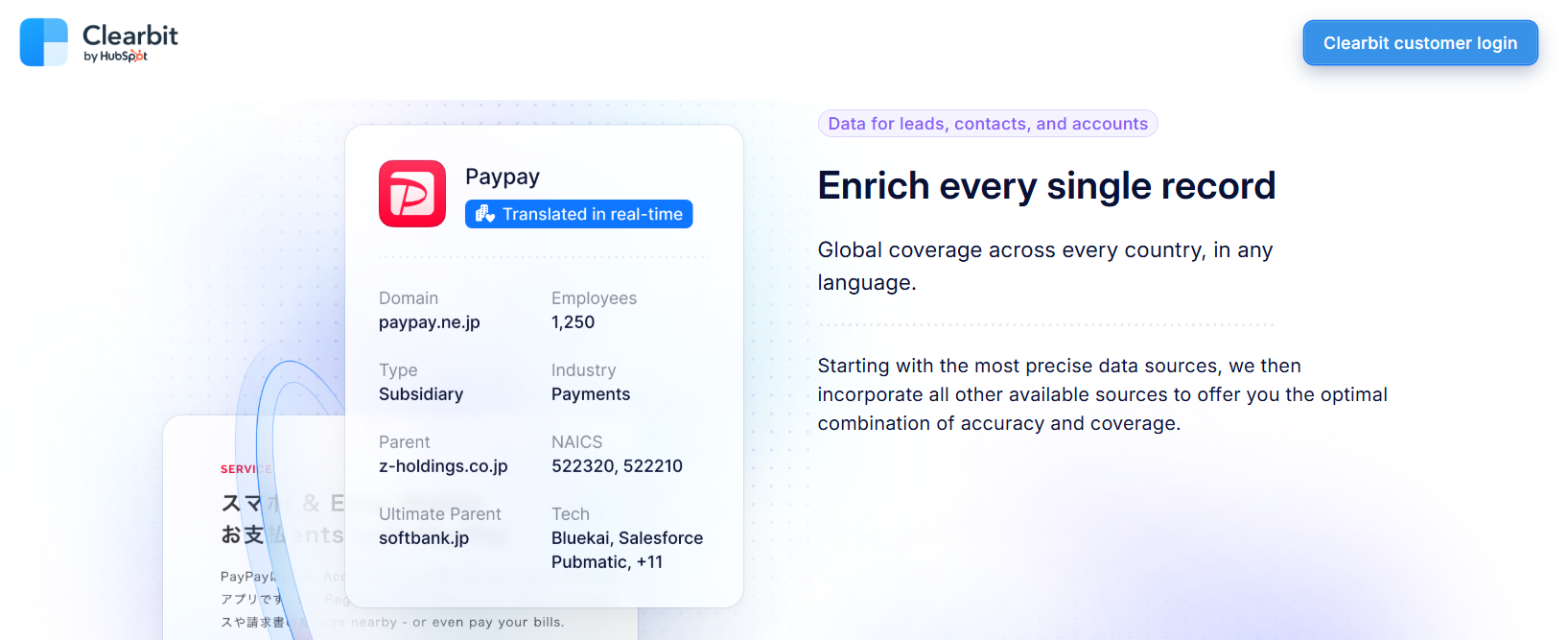
Clearbit, now folded into HubSpot’s Breeze Intelligence, is a firmographic enrichment and reveal tool that excels for HubSpot-native teams enriching inbound leads. For agent builders outside the HubSpot ecosystem, the platform is increasingly tied to HubSpot workflows rather than a standalone data API.
- ⏰ Time to first API call, UI: instant in HubSpot; API: 30 to 60 minutes
- ⚙️ Setup complexity: Low-Medium for HubSpot users; Medium-High outside it
🛠 Core Services
- Firmographic enrichment for company records
- Reveal (anonymous visitor identification)
- HubSpot-native enrichment workflows and Breeze AI integration
- Form shortening and conversion tooling
- API endpoints for enrichment and reveal
📊 Data Coverage and Field Depth
Strong in firmographics and reveal for tech and SaaS; weak in deep contact accuracy and refresh cadences flagged by long-time users. Confidence Level: Medium.
🤖 API and Agent Readiness
API: Yes; depth: firmographics and reveal; MCP: not supported; agent usability: medium, best for HubSpot-bound automations.
💰 Pricing and Cost Structure
Subscription tiers, with self-service capped low and a steep jump to enterprise; HubSpot bundling adds platform pricing on top.
✅ When to Shortlist
Shortlist for HubSpot-centric firmographic enrichment and reveal; avoid for cross-platform agent runtimes, multi-signal aggregation, or contacts-heavy outbound at scale.
💬 Customer Reviews
“APIs enrich new lead notifications with job title data for qualification. Reveal product shows which accounts visit your website… Not always accurate. Needs more frequent refresh. Lacks robust integrations to easily action on data.”
— Brian Y., Head of Marketing, Small-Business Clearbit – G2 Verified Review
“Easy-to-use APIs. Good self-service pricing for small-medium volumes. Good database size… Once over self-service limit, must jump to 4x plan no room to grow realistically. Clearbit X requires yearly agreement with no trial and is very secretive.”
— Dan T., Mid-Market Clearbit – G2 Verified Review
🧩 Where This List Lands
Across all five, only Explorium combines provider-agnostic aggregation, native MCP delivery, and a single transparent credit pool, the three traits that decide whether your agent runs in production or stalls in an async queue. The next section walks through exactly how each tool was scored against the five-axis rubric so you can map the star ratings above back to the criteria that matter for AI agents.
Q2: How Were These Clay Alternatives Selected and Scored for Production Agents?
When I score data providers for agent workloads, the rubric has to reflect what actually breaks at runtime, not what reads well on a feature matrix. The five-axis scoring below is what we used to rank every tool in this guide, and it is built specifically for production AI agents, not generic RevOps tooling.
📊 The Five Weighted Criteria (100 Points Total)
| Criterion | Weight | What It Measures |
|---|---|---|
| API-First and MCP Readiness | 25% | Native API depth, MCP server availability, and sync compatibility with agent loops |
| Source Aggregation and Signal Breadth | 25% | Number of unified sources, enrichment categories, and multi-signal coverage in one call |
| Pricing and Credit Transparency | 20% | Unified credit pool vs per-provider waterfall billing, free tier, and hidden cost surface |
| Sync Latency and Agent SLAs | 15% | p95 response time, async vs sync support, rate limits, and uptime |
| User Reviews (G2, Capterra, and Trustpilot) | 15% | Verified review depth across 3-star, 4-star, and 5-star bands |
⭐ How the Star Scale Works
- 81 to 100: 5★
- 61 to 80: 4★
- 41 to 60: 3★
- 21 to 40: 2★
- 0 to 20: 1★
Every provider was scored on each axis, weighted, then mapped to the band above. Explorium scores 5★ because it is the only entry that combines native MCP, 50+ source aggregation, a single credit pool, and sub-2s sync latency, the four axes most agent-builders trade off across single-source vendors.
🧭 Star-Rating Snapshot
| Provider | API and MCP (25) | Aggregation (25) | Pricing Transparency (20) | Latency and SLA (15) | Reviews (15) | Total | Stars |
|---|---|---|---|---|---|---|---|
| Explorium | 24 | 24 | 19 | 14 | 13 | 94 | ⭐⭐⭐⭐⭐ |
| People Data Labs | 19 | 14 | 14 | 12 | 9 | 68 | ⭐⭐⭐⭐ |
| Apollo.io API | 13 | 12 | 11 | 10 | 9 | 55 | ⭐⭐⭐ |
| Cognism | 11 | 11 | 9 | 11 | 8 | 50 | ⭐⭐⭐ |
| Clearbit (HubSpot Breeze) | 12 | 11 | 10 | 11 | 9 | 53 | ⭐⭐⭐ |
Why These Axes, Specifically for Agents
A spreadsheet-grade rubric (UI polish, persona filters, and sequencer integrations) does not predict whether your agent ships. Three operational realities drove the weights:
- ⏰ Async vs sync mismatch: agent loops expect sub-2s sync responses; async tables stall the loop and break orchestration.
- 💸 Credit burn math: waterfall billing across 5 to 6 providers per record routinely runs 2 to 3x projection, killing unit economics for autonomous agents.
- 🤖 MCP coverage: without a real MCP server, every new enrichment type costs engineering hours on endpoint mapping; with MCP, the agent decides at runtime.
💬 Why Reviews Carry 15%
Reviews keep the rubric honest. Public feedback exposes credit-pricing surprises, async timeouts, and account-management friction that vendor docs never mention.
“Per-row credit cost can vary 100% from stated amounts (e.g., stated 1.1 credits/row, actual 2.5). Contact data quality varies wildly, feels like a black box.”
— Verified User, IT Services, Mid-Market Clay – G2 Verified Review
“Explorium gives us the data I need when I need it. This saves us a lot of time and money instead of managing each data source separately.”
— Ishi N., Enterprise Explorium G2 – Verified Review
The scores above carry into every Q3 to Q6 deep-dive, so when a tool gets called out for async limits or per-provider billing, you can map the critique back to a transparent point allocation.
Q3: Why Are Clay’s Waterfall, Credit Burn, and Async Tables Breaking AI Agent Workflows?
It is 1:30 AM. Your outbound agent fires 5,000 enrichment requests into a Clay table. Claygent fans each record across a six-provider waterfall, Apollo, then Hunter, then Datagma, then a scraper, then a fallback. Credits burn three times your projection before sunrise. The async run hits its window, half the records are still queued, and your agent loop times out waiting for rows that never resolve. By the time you check the table, the morning send window is gone.
🧱 Anatomy of Clay (Honest Strengths Included)
- Table-based UI: a spreadsheet with columns that call enrichment providers; brilliant for RevOps power users prototyping lists.
- Waterfall enrichment: sequential fallback chain across multiple providers per record, billed per provider hit.
- Claygent, Sculptor, and Sequencer: AI research, data shaping, and outbound layered on the table surface.
- 100+ integrations: genuine breadth of providers, CRMs, and outbound tools, with deep flexibility for non-engineers.
✅ Where Clay legitimately shines: list-building speed, RevOps flexibility, and a very strong CS team during ramp.
⚠️ Where It Breaks for AI Agents
The architecture is a spreadsheet, not a runtime data layer. That mismatch creates four concrete failure modes for production agents:
- 💸 Credit burn per agent action: every waterfall step bills separately; 6-provider chains across 5,000 records compound fast, and verified reviewers report stated-vs-actual credit deltas of 100%.
- ⏰ Async timeouts vs sub-2s agent loops: Clay’s table runs are async by design; agents expecting sync sub-2s responses cannot wait on table refresh windows.
- 🤖 MCP coverage gaps: Clay’s official MCP surface is limited compared to its full provider catalog, forcing engineers back to webhooks and table polling.
- 🛠 Multi-week setup and steep learning curve: verified reviewers consistently flag onboarding complexity and opaque credit math.
“Credit system is broken. Pricing is broken. Not fully transparent with rollover limit. Never helped when issues arose.”
— Raphael A., Marketing Lead, Mid-Market Clay – G2 Verified Review
“Steep learning curve, gets very expensive if you don’t know API/integrations. Credit pricing not transparent, should show dollar equivalents.”
— Farzana N., CEO, IT Services, Small-Business Clay – G2 Verified Review
🎯 What Production Agents Actually Need
The right system for an autonomous agent looks structurally different from a Clay table:
- One sync API call returning unified records from 50+ sources, no waterfall fallback chain
- A single credit pool that bills per enrichment, not per provider hop
- Native MCP so the agent picks the signals it needs at runtime
- Predictable p95 latency under sync load, not async windows
That is the gap Explorium fills. We aggregate the providers behind one API, deliver them through a native MCP server, and bill from a single credit pool, so the cost-per-agent-action is something you can model on a spreadsheet before launch, not discover after.
From a 6-step waterfall and async timeouts to one sync call returning unified records, that is the architectural shift production agents need.
Q4: What Architecture Makes a B2B Data Enrichment API Truly Agent-Ready in 2026?
An agent-ready B2B data enrichment API does four things at once: delivers unified multi-source enrichment in a single call, supports MCP-native autonomous selection, holds sub-2s sync latency under agent load, and bills from one transparent credit pool. Anything else is a prospecting tool with an API endpoint bolted on.
🛠 How It Works, Three Architectural Patterns
Pattern A, Waterfall (Clay): Agent to Table to Provider 1 (fail) to Provider 2 (fail) to Provider 3 (match), billed per provider hit. Result: async, multi-credit, and opaque cost.
Pattern B, BYO-Keys Aggregator (Databar or Deepline): Agent to Aggregator, you supply keys, fan-out to vendors. Result: you still own contracts, normalization, and governance.
Pattern C, Unified Data Layer + MCP (Explorium): Agent to MCP server, autonomous signal selection, one API, 50+ sources unified, one credit pool. Result: sync, predictable cost, and zero endpoint mapping.
In Pattern C, when your agent needs context, say, “What is this company’s tech stack, latest funding round, and hiring velocity?”, it queries our MCP server, autonomously chooses which enrichments to retrieve, and gets back a unified, deduplicated record from 50+ underlying sources without ever knowing which provider supplied which field.
✅ What an Agent-Ready Architecture Enables
- Provider-Agnostic Aggregation: firmographics, contacts, intent, technographics, and funding from 50+ providers behind one endpoint
- Autonomous MCP Selection: agents pick the signals they need per workflow with no pre-mapped API calls
- Unified Credit Pool: one credit type spans all 30 enrichment categories; no per-provider waterfall multiplier
- Real-Time Signal Breadth: 4,000 data points across 30 categories on 150M+ companies and 800M+ contacts
- Sync-First Latency Profile: designed for sub-2s p95 under agent load, not overnight table runs
Why Each Axis Matters in Production
- 💰 Predictable cost-per-action: single-pool billing means you can model unit economics before you launch the agent, not after the credit invoice.
- ⚙️ Zero normalization overhead: unified responses skip the multi-vendor stitching that quietly burns 10 to 15 engineering hours a week.
- ⏰ No async stalls: sync responses keep the agent loop tight, so retries and fallbacks stay inside the agent framework, not in a polling worker.
- 🤖 No pre-mapped endpoints: MCP lets new enrichment types ship without an engineering ticket per signal.
🧠 The Comparison Anchor
Think of MCP-native delivery as giving your agent a dedicated data engineering team that already knows every source, every field, and every freshness cadence, querying on your behalf 24/7, at a fraction of the cost of building that infrastructure in-house.
A waterfall stitches providers. A BYO-keys aggregator forwards your contracts. A unified data layer with MCP is the only architecture where the agent, not your engineers, decides what data the workflow needs, and gets it back in a single sync call. That is what agent-ready means in 2026.
Q5: How Do the Top Clay Alternatives Compare on API, MCP, Latency, and Pricing?
If you are reading this, you are not picking a prospecting UI. You are picking the data layer your agents will run on for the next two years. The decision splits cleanly into two camps: aggregator architecture (Explorium) and single-source APIs (People Data Labs, Apollo, Cognism, and Clearbit), with Clay sitting in the background as the legacy table-based baseline being replaced.
🧭 Single-Source APIs, Strengths and Hard Limits
✅ Dev-friendly endpoints and clean schemas: PDL and Apollo both ship usable APIs with reasonable docs.
✅ Each excels in its own lane: Cognism on EU/US compliance, Clearbit on reveal, and PDL on person depth.
❌ Source lock-in: every additional signal (intent, technographics, and funding events) means a new contract, a new schema, and a new normalization layer your engineering team owns.
✅ Pricing is published for many tiers, which makes basic budgeting workable.
❌ No native MCP: your agent cannot autonomously decide which signals to fetch, so every new enrichment type is an engineering ticket.
Where That Breaks for Agents
A single-source API is fine when the workflow is “give me contacts.” It breaks the moment your agent needs a unified view (firmographics + intent + tech stack + funding) inside one loop, because you are now stitching three or four vendor responses on the critical path.
🤖 Explorium’s Differentiated Approach
We took the opposite bet. One API aggregating 50+ providers, a native MCP server letting agents pick signals at runtime, a single credit pool spanning 30 enrichment categories, and 97.8% firmographic accuracy benchmarks across 150M companies and 800M contacts. You stop being the integration layer.
“Instead of connecting to multiple data sources and APIs, we only require one connection, Explorium!”
— Mirit H., Mid-Market Explorium G2 – Verified Review
📊 Side-by-Side Comparison
| Tool | Data Architecture | MCP Support | p95 Sync Latency | Credit Model | G2 Rating | Best for Agents |
|---|---|---|---|---|---|---|
| Explorium | Unified, 50+ sources behind one API | Native | Sub-2s sync | Single credit pool, all signals | 4.5+ | ✅ Production agents needing multi-signal enrichment |
| People Data Labs | Single-source, person/company API | None | Sync (single endpoint) | Usage credits, custom enterprise | 3.5 to 4.0 | Devs building custom pipelines on raw data |
| Apollo.io API | Single-source, contacts-first | None | Sync, tier-gated | Seat + credit overlay | 4.0+ | Mid-market SaaS bundling outbound + UI |
| Cognism | Single-source, contacts/compliance | None | Sync, batch-friendly | Annual subscription | 3.0 to 4.0 | EU/US compliance-heavy SDR motions |
| Clearbit (HubSpot Breeze) | Single-source, firmographics + reveal | None | Sync, HubSpot-bound | Subscription tiers | 3.5 to 4.0 | HubSpot-native enrichment + visitor reveal |
| Clay (baseline) | Waterfall across providers, table UI | Limited | Async tables | Per-provider credit billing | 4.0+ | RevOps power users prototyping lists |
💬 What Buyers Are Saying Across the Field
“Apollo gives us solid contact coverage and built-in sequencing, but the monthly subscription model means costs spike fast at scale.”
— Tejender K., Digital Marketing Executive, Mid-Market Apollo – G2 Verified Review
“APIs enrich new lead notifications with job title data for qualification… Not always accurate. Needs more frequent refresh. Lacks robust integrations to easily action on data.”
— Brian Y., Head of Marketing, Small-Business Clearbit – G2 Verified Review
How I’d Decide
- Need contacts only, on a tight UI workflow? Apollo or Cognism.
- Need raw person data for a custom warehouse pipeline? People Data Labs.
- Need firmographics + reveal inside HubSpot? Clearbit / Breeze.
- Need a unified, MCP-native, multi-signal data layer your agents can actually run on in production? Explorium.
The honest line: choose single-source if your workflow is single-signal. Choose Explorium if you are building agents that need firmographics, contacts, intent, technographics, and funding in one credit-transparent API call, without writing the integration layer yourself.
Q6: How Do You Switch From Clay Tables to a Direct API + MCP Enrichment Stack?
Score your migration readiness against the seven criteria below. This is the same audit I run with teams moving off Clay’s table workflows onto a direct-API + MCP agent runtime, and it surfaces the gaps before they hit production.
✅ The 7-Item Migration Checklist
- Enrichment Audit: Have you mapped every Clay column to the underlying provider and credit cost so you know what you are actually paying per record?
- Agent Loop SLA: Is your agent runtime expecting sync sub-2s responses, and are async tables currently blocking that loop?
- MCP Framework Choice: Have you picked your agent framework (Claude Code, n8n, LangChain, or CrewAI), and does your enrichment provider expose a native MCP server it can call?
- Credit Model Mapping: Is credit burn predictable per agent action today, or are waterfall steps multiplying cost in ways you cannot model in advance?
- Fallback Logic Decommission: Are you ready to retire multi-step waterfall fallbacks in favor of a unified single-call response?
- Compliance Handover: Is your new provider handling GDPR/CCPA/SOC 2 with documented resale rights, so you are not chasing governance per source?
- Sandbox Cutover: Can you validate the new API against a real workload (1k to 5k records) before you flip production traffic?
What Each Unchecked Box Tells You
Every box left unchecked points at a specific Clay-to-API gap, opaque credit math, async loop stalls, missing MCP coverage, or a governance handoff that never happened. Treat the checklist as diagnostics, not a wishlist.
🧭 Score Interpretation
- 6 to 7 checks ✅: You are ready to migrate this sprint. Spin up a free account, point your agent framework at the new MCP server, and run a 1k-record sandbox cutover.
- 3 to 5 checks ⚠️: Architectural rework needed. Most teams here have async tables wired into agent loops or no MCP framework chosen yet; budget two weeks before the production cutover.
- 0 to 2 checks ❌: You are still operating Clay as a RevOps spreadsheet. Migration is premature; first decide whether agents are actually running this workflow or whether humans are.
🤖 How Explorium Closes the Gaps
Most teams I talk to come in scoring 2 to 3 and walk out scoring 7 within a week, because the architecture removes the unchecked items by design:
- One API, 50+ sources: the enrichment audit collapses into one credit ledger, not six provider invoices.
- Native MCP server: Claude Code, n8n, and LangChain integrations are documented out of the box; the agent picks signals autonomously.
- Single credit pool: credit burn becomes a function of agent calls, not waterfall depth, so unit economics are predictable before launch.
- Sync sub-2s response profile: async stalls disappear because the data layer is built for the agent loop, not a table refresh.
- Free account, minutes to first API call: sandbox cutover takes an afternoon, not a sales cycle.
💼 Why It Holds Up at Production Scale
Leading GTM platforms, including teams running Cognism, Outreach, and large outbound stacks, already lean on our infrastructure because aggregated data without agent-native delivery is just expensive record lookup. The migration is not a leap of faith; it is a swap of the integration layer for one that already speaks MCP.
“The richness and breadth of data is incredible… it is the data we need to make faster and better decisions.”
— Ishi N., Enterprise Explorium G2 – Verified Review
Scored below 5? Create a free Explorium account, point your existing agent at our MCP server, and validate coverage against your current Clay table on a 1k-record sample. Validation takes minutes, not meetings.
FAQs


