

- One MCP for all data needs: Vibe Prospecting pulls firmographics, technographics, funding, and 18 buying-signal categories in one call, replacing the single scraped headline most personalization tools merge into a template.
- Built for scale: up to 1,000 entities per call at 100 QPS lets a team test personalization on hundreds of accounts before a bad pattern damages sender reputation, not the 20-100 an in-context tool holds.
- Affordable by design: a free account with pooled credits, plus a 5-record sample before any credits are charged, lets a team validate a signal-based angle before committing budget.
- The real failure mode: AI-personalized cold emails still get ignored because one scraped fact merged into a template reads as fake familiarity, not relevance.
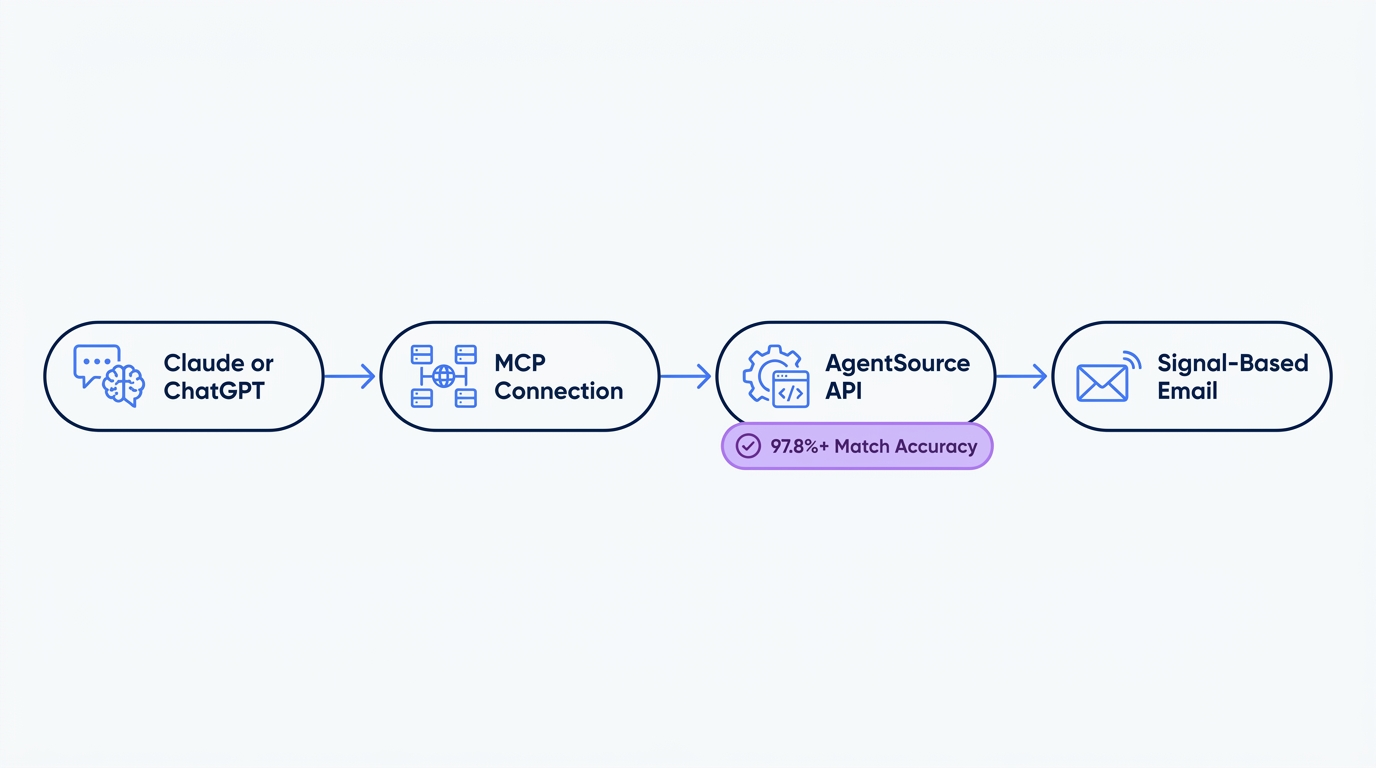
- The number that matters: AgentSource MCP delivers 97.8%+ company match accuracy, the single fix for personalization built on a mismatched company record.
- Outcome: connect Vibe Prospecting from the Claude or ChatGPT Connectors Directory and rebuild personalization on real signal context.
AI-personalized cold emails still get ignored even when every field is filled in correctly, and the reason has nothing to do with the AI. Signal-based personalization reaches an 18% reply rate versus roughly 9% for generic templates, a 2x gap that only shows up when the underlying data supports what data enrichment actually means: real context, not a name inserted into a template.
Most personalization tools merge one scraped fact, a job title or a headline, into an otherwise generic pitch. Prospects read that as fake familiarity, and a 2026 wave of practitioner posts is naming the exact mechanics: the fake familiarity, the 14-paragraph pitch, the bare Calendly link.
This checklist covers the message-quality failures, the deliverability discipline underneath them, and the data layer that makes real personalization achievable at scale.
What’s Actually Going Wrong When Every Merge Field Is Filled In?
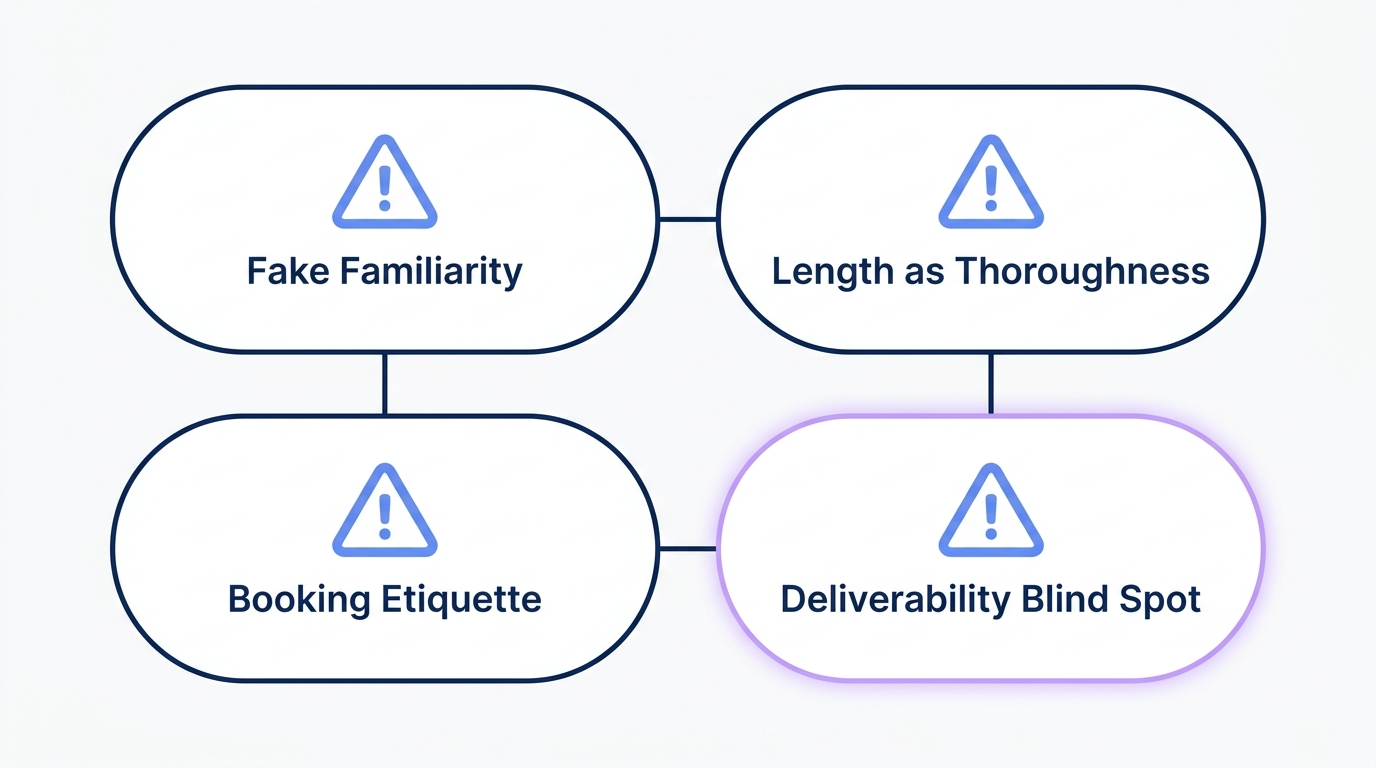
Filled merge fields are not personalization; they are four distinct failure modes stacked on top of each other, and a well-personalized email that trips even one of them still gets ignored. A tool can insert a first name and one scraped fact into a template, but a prospect reading it sees a form letter wearing a costume.
❌ The Four Failure Modes Hiding Behind “Personalized”
- Fake familiarity: one scraped fact stands in for real relevance.
- Length as thoroughness: a 14-paragraph pitch covers every objection instead of earning one reply.
- Booking etiquette: a bare Calendly link after a verbal yes shifts the scheduling work back onto the prospect.
- Deliverability blind spot: a well-written email from an unwarmed mailbox never reaches an inbox.
✅ What Actually Earns a Reply
- A message built on a real, current signal, not a static scraped fact.
- A length short enough to read in under 15 seconds.
- One clear, low-friction next step, not a menu of asks.
- Sending infrastructure disciplined enough that the message reaches the inbox.
What Is Fake Familiarity and Why Does It Hurt Reply Rates More Than No Personalization at All?
Fake familiarity is a merge field standing in for relevance, and it depresses reply rates because it signals the sender automated the lookup, not the thinking. Josh Braun’s widely shared LinkedIn post names the pattern directly: “the bad personalization, the fake familiarity, the 14-paragraph pitch.”
❌ How Fake Familiarity Reads to a Prospect
- The opening line proves the sender ran a lookup, not that they understand the business.
- A single scraped fact (a headline, a job title) gets treated as if it were deep research.
- The rest of the email reverts to a generic template the moment the merge field ends.
📊 Signal-Based vs Single-Fact Personalization
| Dimension | Single scraped fact (merge field) | Signal-based personalization |
|---|---|---|
| Average reply rate | ~9% | ~18% |
| Data behind the message | One static field (name, title, headline) | Firmographics, technographics, funding, buying signals |
| Bounce rate risk if data is stale | 1.29% | 2.55% (only when source accuracy is unverified) |
| Fix for the bounce-rate gap | None available | 97.8%+ company match accuracy source data |
Deeper personalization only pays off when the source data is accurate, an argument for pairing depth with verified, high-match-accuracy data, covered below.
How Long Should a Cold Email Be to Get a Reply in 2026?
Short enough to read in one glance: a 5-line email that gets a reply outperforms a 500-word email that gets ignored. Olatunji Damilare’s cold-email breakdown lists personal, relevant, short, focused on a problem, and a clear next step as the actual requirements.
❌ Why Completeness Reads as a Pitch
- A 14-paragraph email preempts every objection before the prospect agrees to a conversation.
- Length signals a template, not a message written for one person.
- Every extra paragraph is another point where the reader can stop reading.
✅ The Structure That Gets Replies
- One sentence on why this company, specifically, right now.
- One sentence naming a problem tied to a real signal, not a guess.
- One sentence proposing a single, low-friction next step.
Why Does Sending a Bare Calendly Link Hurt Reply Rates?
A bare Calendly link after a prospect verbally agrees to a call shifts the scheduling work back onto them, and that reads as bad etiquette from the person who asked for the meeting. Christian Bonnier’s post on this exact pattern is blunt about who owns that step.
❌ What the Calendly Link Signals
- The sender wanted the meeting but is not willing to do the small work of proposing a time.
- It reverses the effort the prospect just extended by agreeing to talk.
- It reads as one more automated step, undercutting whatever personalization came before it.
“Sending them your Calendly link is showing bad etiquette… you’re the one that wanted to get on a call in the first place.” Christian Bonnier, via LinkedIn
✅ The Manual-Feel Alternative
- Propose two specific times instead of a link, even if a scheduling tool sits behind the scenes.
- Confirm the meeting in the prospect’s stated timezone, not a default.
- Treat the booking step as part of the relationship, not a hand-off to software.
Testing on 20 prospects tells you little. Connect AgentSource MCP and validate a pattern across hundreds of accounts before it goes out at scale.
Is a Cold DM Held to the Same Etiquette Rules as a Cold Email?
Yes: a cold DM is a cold email in a different inbox, and the same relevance and etiquette standards apply. Nolan Ong’s post to people sliding into his DMs makes the equivalence explicit: “cold DM = cold email, a different inbox with same rules… give something worth replying to.”
🔑 Same Inbox Rules, Different Channel
- A generic opener fails on LinkedIn or X for the identical reason it fails in email.
- Length discipline applies just as much in a DM, where a wall of text is even more visible.
- The same clear-next-step requirement holds: one ask, not several.
✅ What Changes Channel to Channel
- DMs tolerate a more conversational tone than email, but not less specificity.
- Response windows are shorter, so the next step needs to be answerable in one line.
- Platform etiquette adds a layer email doesn’t have, but doesn’t replace the core requirements.
How Does Deliverability Infrastructure Decide Whether a Good Email Ever Gets Read?
A well-personalized email that lands in spam fails for a reason that has nothing to do with the message. Industry average bounce rate sits at 7-8%, top senders keep it under 2%, and the best keep it under 1%. Eugene Kadzin’s $10M+ setup credits exactly this: he “keeps his bounce rate at 1% while the industry sits at 3%.”
⚠️ The Infrastructure Practitioners Skip
- Mailbox warmup before a domain sends at volume.
- Sends-per-day caps matched to domain age and reputation.
- List verification before send, not after a bounce spike.
📊 Deliverability Benchmarks for 2026
| Sender tier | Bounce rate | What it implies about infrastructure |
|---|---|---|
| Industry average | 7-8% | No warmup discipline, unverified lists |
| Top-performing senders | Under 2% | Warmup, sends-per-day caps, list hygiene |
| Best senders (Kadzin benchmark) | 1%, vs 3% industry | Infrastructure treated as inseparable from message quality |
What Does Relevant Personalization Actually Require Beyond a Name and a Scraped Headline?
Relevant personalization requires firmographic, technographic, and buying-signal context in one place, not a single scraped fact stitched to a template. A scraper plus a headline plus a guess is exactly the pattern behind fake familiarity.
❌ Why One Scraped Fact Isn’t Enough
- A headline tells you a title, not a real problem.
- Without funding or hiring signals, there’s no evidence the timing is right.
- A stale fact is the most common cause of a mismatched record, producing the “they don’t know us” reaction.
✅ What a Real Personalization Data Layer Looks Like
- Firmographics and technographics that establish fit, not just a name.
- Funding, workforce, and website-change signals that establish timing.
- A side-by-side B2B data provider comparison before picking a source, since coverage and match accuracy vary widely across B2B data providers.
How Does Vibe Prospecting Fix the Data Layer Behind Personalization?
Vibe Prospecting fixes the data layer behind fake familiarity with one MCP connection for real signal context, server-side scale to validate hundreds of accounts, and a free, credit-pooled account.
🔑 One MCP for All Your Data Needs
- A single call returns firmographics, technographics, funding, workforce trends, website changes, and 18 buying-signal categories across 80+ signal types.
- Coverage spans 150M+ company profiles and 800M+ people profiles from 50+ sources, so the “relevant” bar is achievable from one pull.
- 97.8%+ company match accuracy removes the most common cause of fake-familiarity reads: a mismatched company record.
🚀 Built for Scale (Hundreds to Thousands per Run)
- Up to 1,000 entities per call over the AgentSource API at 100 QPS sustained.
- A team validates a pattern across hundreds of accounts before sending, not the 20-100 an in-context tool can hold.
- That scale surfaces whether a message earns replies before a bad pattern damages sender reputation.
💰 Affordable by Design
- Free account, no sales call, credits pooled across every endpoint instead of a per-endpoint allocation.
- Pooling cuts agent-workload spend 30-60% versus per-endpoint or per-seat tools.
- Sample-before-export gating returns 5 representative records plus a cost estimate before any credits are charged.
⚡ MCP Configuration
{
  "mcpServers": {
    "vibe-prospecting": {
      "command": "npx",
      "args": ["-y", "@explorium-ai/vibeprospecting-mcp"],
      "env": { "EXPLORIUM_API_KEY": "your_api_key_here" }
    }
  }
}
Most builders never touch this file: adding Vibe Prospecting from the Claude or ChatGPT Connectors Directory is a one-click install; this config only matters for Claude Code power users running the Model Context Protocol directly.
“A cold email doesn’t need to say everything. It needs to make the prospect want to reply.” Josh Braun, via LinkedIn
Getting Started: The AI Cold Email Checklist That Earns Replies in 2026
The checklist that separates a reply from a delete has two halves: message discipline and infrastructure discipline, and Vibe Prospecting is the data layer that makes the message half achievable at scale.
- Step 1: Create a free Explorium account and connect Vibe Prospecting from the Claude or ChatGPT Connectors Directory.
- Step 2: Pull firmographic and signal context for a sample of 5 accounts before spending credits on a full list.
- Step 3: Write a 5-line email: fit, a signal-based problem, one clear next step, no bare scheduling link.
- Step 4: Validate the pattern across a few hundred accounts using the 1,000-entity, 100-QPS bulk call before scaling.
- Step 5: Confirm mailbox warmup, sends-per-day caps, and list verification so the validated message reaches an inbox.
🔑 The Decision Framework
AI-personalized cold emails still get ignored when personalization means one merge field, length substitutes for relevance, and booking etiquette signals automation. The message half needs a single data source with real signal context; the infrastructure half needs warmup and bounce-rate discipline. Vibe Prospecting closes the data gap with one MCP connection, scale to validate hundreds of accounts before a bad pattern compounds, and a free, credit-pooled account.
Ready to replace merge-field personalization with real signal context? Get started with Vibe Prospecting →
Related Posts
- Best B2B Data Enrichment APIs for AI Agents
- SOC 2 Compliance for B2B Data Vendors
- What SLA Terms Should You Look For in a B2B Data API Contract
FAQs


