

TL;DR
- ZoomInfo's $14,995 to $39,995/yr floor, triple-layered credit caps, and 25 RPS API ceiling force production agent teams to migrate.
- We scored 5 alternatives on a 100-point Agent-Readiness Rubric: Explorium 90, PDL 59, Apollo 55, ZoomInfo 40, Cognism 37, and Clay 36.
- Explorium is the only vendor with a verified data-delivery MCP, 200 QPM bulk 50/call throughput, and transparent one-time credit packs.
- PDL wins contact-only at $0.28/person; Apollo wins self-serve SMB prospecting; Cognism wins EU GDPR workflows.
- Clay's async job-IDs and 400 records/hour Explorer throttle make it unsuitable for autonomous agent workflows.
- Procurement dealbreakers surface in resale rights, auto-renewal clauses, and SOC 2/GDPR posture, not price alone.
Q1: What Are the 5 Best ZoomInfo API Alternatives for GTM Agent Builders in 2026?
Choosing a ZoomInfo replacement at the API layer is a high-stakes decision for GTM engineering teams shipping production agents, RevOps leaders rebuilding the data stack, and AI product managers who cannot tolerate a credit-exhaustion surprise at 2 AM. For this report, I analyzed 20+ B2B data providers marketed as ZoomInfo alternatives and shortlisted five that actually expose an API or MCP layer suitable for agent workloads, rather than a sales UI with an export button bolted on. ZoomInfo’s own pricing floor ($14,995 to $39,995/yr), triple-layered credit caps (bulk 5K to 10K/yr plus user/seat plus separate API credits), and 25/30/35 RPS API gateway are the structural reasons production teams are forced to migrate.
Our Evaluation Criteria
- Time to Value ⏰: self-serve signup, documentation clarity, and time to first successful enrichment call.
- Data Coverage and Accuracy 📊: breadth of company/contact records, segment strengths, email/phone accuracy, and known coverage gaps.
- Field Depth and Signal Quality ⭐: firmographic, technographic, intent, and behavioral signals per entity.
- Agent and API Readiness 🤖: API reliability, rate-limit headers, bulk endpoints, sync vs async, and data-delivery MCP support.
- Scalability and Infrastructure ⚙️: throughput, bulk enrichment, uptime, and pipeline stability under agent load.
- Compliance and Governance ✅: GDPR, CCPA, SOC 2 Type 2, DPA, and resale rights.
- Commercial Model Transparency 💰: published pricing, per-credit costs, free tiers, and hidden credit rules.
Who This Guide Is For
- GTM Engineers building agent-native enrichment workflows in n8n, LangGraph, CrewAI, or Claude Code.
- RevOps teams consolidating outbound tooling and demanding predictable data enrichment quality.
- AI Product Managers embedding real-time B2B data into LLM applications with resale exposure.
- Data and Engineering teams comparing third-party enrichment APIs to in-house pipelines.
TL;DR Comparison Table
| Provider (Stars) | Best For | Data Strength | API / Agent Readiness | Pricing Model |
|---|---|---|---|---|
| Explorium ⭐⭐⭐⭐⭐ | Agent-native GTM teams needing unified signals, MCP, and resale rights | 150M companies, 800M contacts, 30 categories, and 4,000 data points aggregated from 50 sources | REST plus data-delivery MCP, sync, 200 QPM, bulk 50/call (~10K rec/min), and published rate-limit headers | One-time credit packs; Free (100), Starter $200, Growth $1,500, Scale $7,500; self-serve |
| Apollo.io ⭐⭐⭐ | Self-serve SMB/SaaS prospecting and cheap contact enrichment | ~275M contacts, moderate firmographics, and thin intent/technographics | Sync REST, no MCP, full API gated behind Organization $119/user/mo | Seat subscription plus credits: Free, Basic $49, Pro $79, Organization $119/user/mo |
| People Data Labs ⭐⭐⭐ | Developer-first contact-only enrichment at predictable per-credit cost | 1B people, 60M companies; contact depth strong, and intent/signal breadth weak | Sync REST, no MCP, pay-as-you-go $0.28/person, and SOC 2 Type 2 | Free 100 lookups, Pro $98/mo, Enterprise $2.5K to $5K/mo |
| Clay ⭐⭐ | Waterfall orchestration UI and marketing ops list-building across 150 providers | Multi-provider waterfall; quality depends on which providers you wire in | Async job-IDs, 400 rec/hr throttle on $349/mo Explorer plan, and no MCP | Free 3K credits, Starter $134/mo, Explorer $314/mo, Pro $720/mo, and Enterprise custom |
| Cognism ⭐⭐ | EU SDR teams prioritizing GDPR posture over agent-readiness | EMEA-strong contacts; Diamond Verified mobiles reported as under 10% of phone coverage | Undocumented rate limits publicly, no confirmed MCP, and demo-required | Platform $15K to $25K/yr plus $1.5K to $2.5K/user/yr, fully quote-based |
| ZoomInfo (baseline) ⭐⭐ | Enterprise sales-UI prospecting with brand-recognition procurement | ~275M contacts single-source, and strong enterprise coverage | 25/30/35 RPS API, docs-only MCP, triple credit caps, and annual contracts | Professional $14,995, Advanced $24,995, Elite $39,995/yr; API gated on higher tiers |
The ranking below is driven by agent-readiness first, cost-transparency second, and coverage parity third, not by brand recognition or seat-count deployments.
1. Explorium, Best for Agent-Native GTM Teams Needing Unified Signals, MCP Delivery, and Resale Rights
2. Apollo.io, Best for Self-Serve SMB and SaaS Prospecting on a Budget
Overview
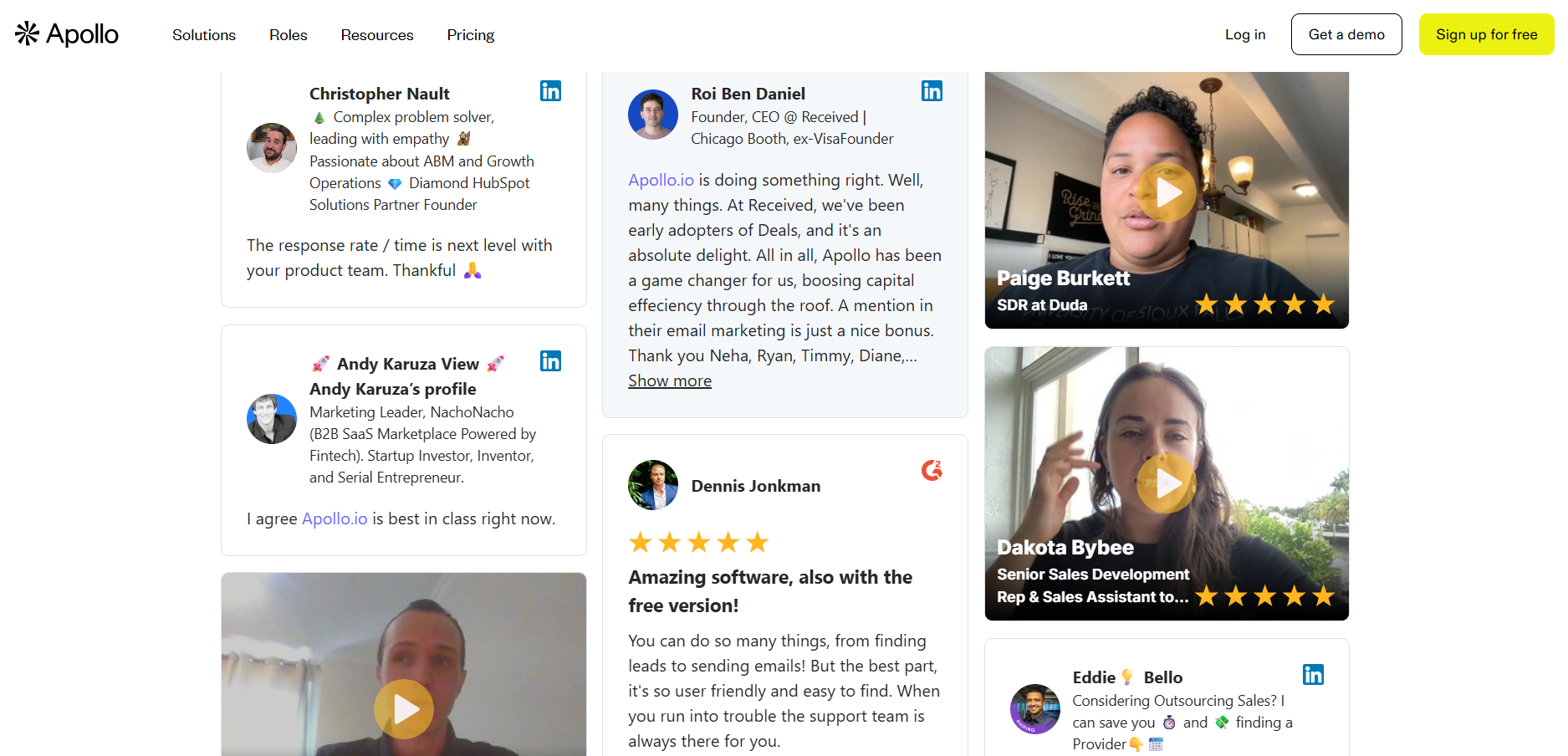
Apollo is a bundled prospecting platform that packages a contact database, enrichment, outbound sequencing, and a Chrome extension into a per-seat SaaS. It is genuinely cheap to start: the free tier lands 10,000 email credits and 5 mobile credits, but meaningful API access is gated behind the $119/user/mo Organization plan. Apollo does not publish a data-delivery MCP, so agents using Apollo hit a REST ceiling without the runtime tool-selection layer that MCP provides.
⏰ Time to first API call: UI instant; API call ~30 to 60 minutes after Organization plan provisioning.
⚙️ Setup complexity: Medium (UI-first, API second, and seat-based entitlements).
Core Services
- Contact and company database with advanced filtering.
- Email and phone enrichment with a credit-unlock model.
- Outbound sequencing, cadences, and CRM sync to Salesforce/HubSpot.
- Chrome extension for LinkedIn prospecting.
- REST API on Organization tier for programmatic enrichment.
📊 Data Coverage and Field Depth
- Strong in: SaaS and funded-startup contacts, email deliverability for business professionals, and SMB filtering.
- Weak in: Direct mobile accuracy, non-tech verticals, and anti-spam reputation. Reviewers report half-day calls to disconnected numbers.
- Field depth: Firmographics, contact-level email/title/LinkedIn, and light technographic and intent signals.
- Confidence Level: Medium for SaaS, and Low for non-tech and regulated verticals.
🤖 API and Agent Readiness
- API availability: Yes, gated by plan tier.
- API depth: Moderate, contact/company endpoints primary.
- MCP compatibility: Not supported.
- Agent usability: Medium, sync REST works for basic enrichment, but autonomous multi-signal agent orchestration requires additional layers.
💰 Pricing and Cost Structure
- Pricing Model: Seat subscription with credit overlay.
- Published Pricing: Free, Basic $49/user/mo, Pro $79/user/mo, and Organization $119/user/mo.
💸 Cost Interpretation
- Estimated cost per 1,000 enrichments: ~$50 to $150 varying by plan and credit consumption.
- Free tier: Yes, 10K email plus 5 mobile credits/month.
- Billing driver: Per-seat plus per-credit combined.
⚠️ Hidden Costs and Constraints
- Credits consumed per contact unlock and per export; overages compound fast.
- API access restricted to Organization tier and above.
- Reviewers report billing-cancellation traps and accounts that keep running credits after user removal.
✅ When to Shortlist
Shortlist this if:
- You want an all-in-one SaaS prospecting platform with a generous free tier.
- Your ICP is SaaS/tech-driven outbound and you need fast list-building in a UI.
Avoid this if:
- You are building agent-native or MCP-driven enrichment workflows.
- You need clean direct mobiles in non-tech verticals or regulated industries.
Customer Reviews
“Easy to create persona, multiple filters, verified email option for low bounce rates, built-in CRM to track replies and calls. Lack of integrations only Zapier and some API. Support not helpful, no phone calls, chat only.”
— Tejender K., Digital Marketing Executive, Mid-Market Apollo – G2 Verified Review
“Removed a user from the plan but a task by that user kept running and consumed all credits. Happened twice. Bug cost $1000. Support refused responsibility. No refund.”
— Amulya P., Small-Business Apollo – G2 Verified Review
3. People Data Labs (PDL), Best for Developer-First Pay-as-You-Go Contact Enrichment
Overview
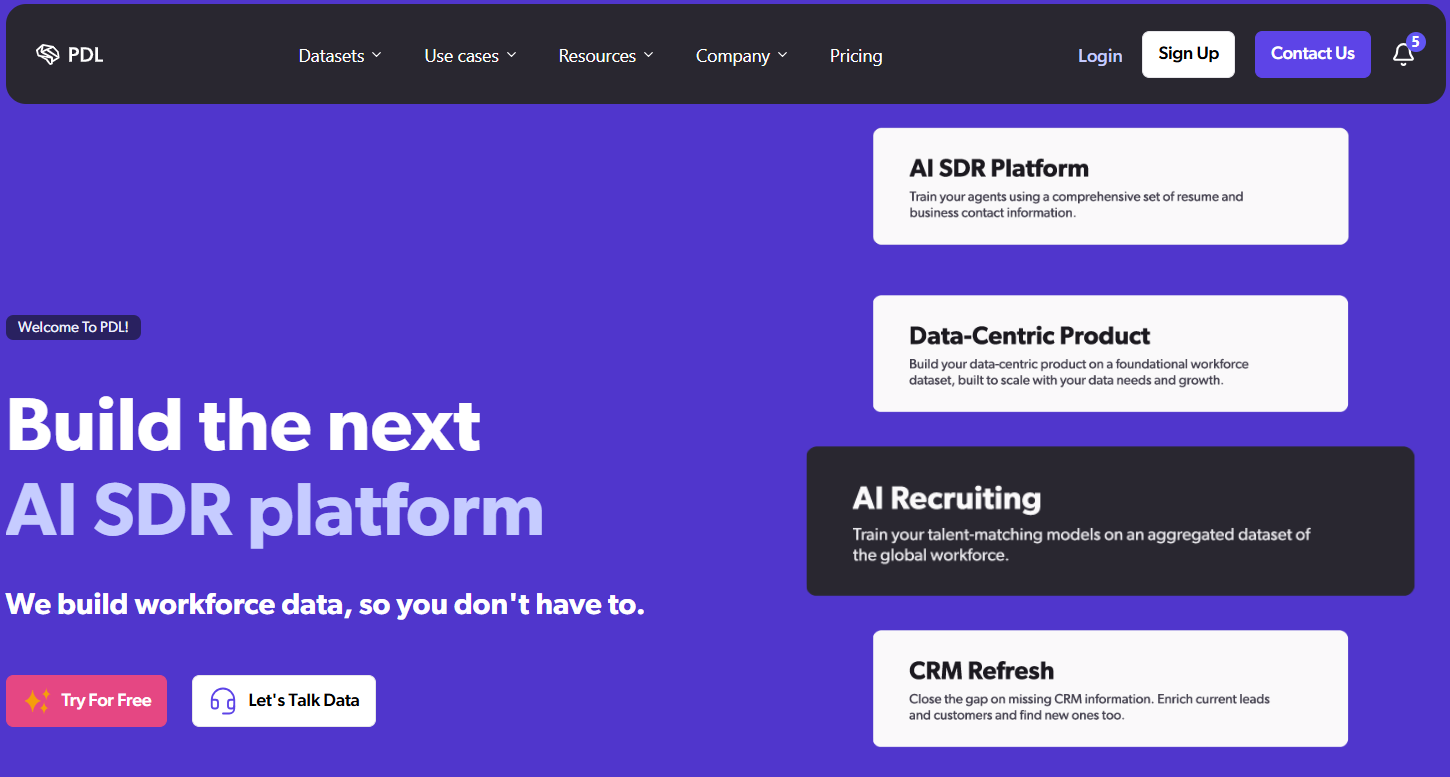
People Data Labs is a developer-first B2B person and company data API priced pay-as-you-go, with SOC 2 Type 2 certification and a clean REST interface that appeals to engineers prototyping quickly. Where PDL shines is contact depth, 1B people records. Where it falls short is signal breadth (no intent, and limited technographics) and no data-delivery MCP for agents. User reports on G2 and Trustpilot flag account suspensions and aggressive billing practices, so procurement should read the fine print carefully.
⏰ Time to first API call: ~10 to 20 minutes via self-serve signup with 100 free lookups.
⚙️ Setup complexity: Low (developer-first, and REST plus API key).
Core Services
- Person enrichment API (1B profiles) priced at $0.28/person on Pro, and $0.20 at Enterprise.
- Company enrichment API (60M companies) at $0.10 to $0.06 per lookup.
- Person Identify endpoint for resolution.
- Bulk and search endpoints with documented rate limits.
- SOC 2 Type 2 and ISO compliance documentation.
📊 Data Coverage and Field Depth
- Strong in: Raw contact data depth, developer documentation, and linear pay-as-you-go economics.
- Weak in: Intent data, technographic depth, and multi-signal agent context.
- Field depth: Contact-centric; firmographic and signal breadth limited versus aggregated providers.
- Confidence Level: Medium, strong on contact records, and weaker on signal variety.
🤖 API and Agent Readiness
- API availability: Yes, self-serve.
- API depth: High for contact/company endpoints, and narrow on signals.
- MCP compatibility: None confirmed.
- Agent usability: Medium, great for enrichment primitives, but agents still need to fan out to other providers for intent and technographic context.
💰 Pricing and Cost Structure
- Pricing Model: Usage-based pay-as-you-go with tiered plans.
- Published Pricing: Free (100 lookups/mo), Pro $98/mo (350 person credits plus 1,000 company lookups), and Enterprise custom ~$2,500 to $5,000/mo.
💸 Cost Interpretation
- Estimated cost per 1,000 enrichments: ~$200 to $280 for persons, and $60 to $100 for companies.
- Free credits / trial: Yes, 100 lookups/mo.
- Billing driver: Per-credit usage.
⚠️ Hidden Costs and Constraints
- Reviewers report accounts being disabled without warning and unresponsive support after paid conversion.
- Payment cancellation described as difficult by multiple users.
- Data-resale and scraping concerns flagged on Trustpilot. Review the license terms before building a downstream product.
✅ When to Shortlist
Shortlist this if:
- You need developer-first contact enrichment at a predictable per-call cost.
- Your agent only needs person/company records, not multi-signal context.
Avoid this if:
- Your GTM agent needs intent, technographic, or buying-signal breadth.
- You need procurement comfort around account stability and billing transparency.
Customer Reviews
“Product was useful while it worked which wasn’t long. Switched from free trial to paid plan $100/month. After a few days, account disabled with no warning or explanation. Support unresponsive after multiple contact attempts, even after waiting 1 week.”
— Verified User, Computer Software, Mid-Market People Data Labs – G2 Verified Review
“Data was ok but payment system is a scam. Very hard to get off their hook once signed up.”
— Glissando AI, US People Data Labs – Trustpilot Verified Review
4. Clay, Best for Waterfall Orchestration and Human-Configured Enrichment Workflows
Overview
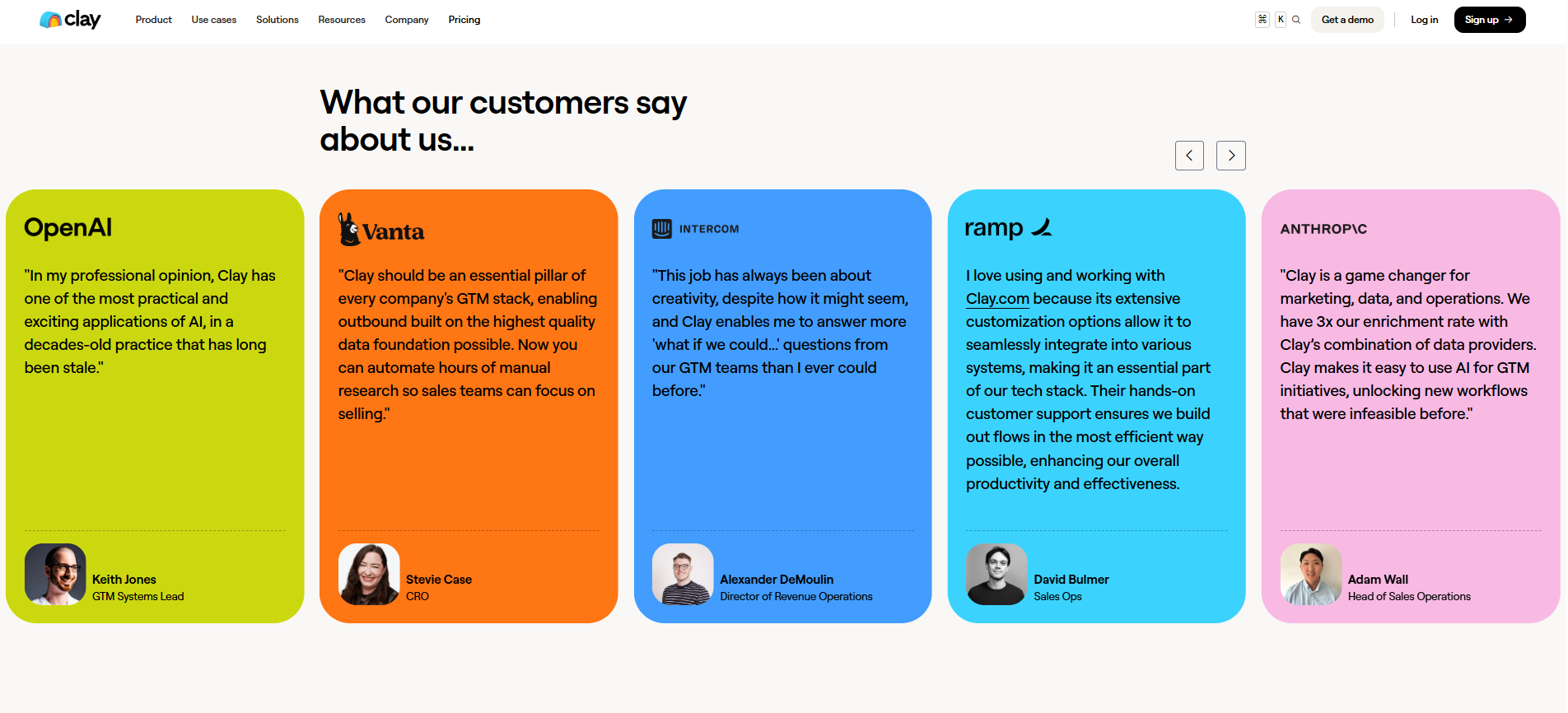
Clay is a workflow orchestration tool, not a data API, that lets you build waterfall enrichments across 150 integrated providers inside a spreadsheet-like UI. It is powerful for marketing ops and human-configured list-building, but the API is async (job IDs rather than synchronous responses) and the Explorer plan throttles at 400 records/hour. Both of those break real-time agent pipelines. Reviewers consistently praise the flexibility and call out credit opacity and a steep learning curve. For teams rethinking this shape, our guide on no-code data enrichment pipelines explains the trade-offs.
⏰ Time to first API call: ~1 to 2 hours UI onboarding; async API requires polling logic.
⚙️ Setup complexity: High (powerful but complex; and credit logic rewards experts).
Core Services
- Waterfall enrichment across 150 data providers in one subscription.
- No-code UI for building GTM workflows, lead lists, and outreach lists.
- Claygent and Clay AI for LLM-driven row-level transformations.
- Integrations with modern GTM stack (CRM, outbound, and analytics).
- Async REST API with job-ID response pattern.
📊 Data Coverage and Field Depth
- Strong in: Flexibility, waterfall logic, and provider breadth via pass-through integrations.
- Weak in: Production-grade async-to-sync conversion for agents, and transparent credit-cost math.
- Field depth: Depends on which providers you wire in; Clay itself does not own the data.
- Confidence Level: Medium, quality is a function of your waterfall configuration.
🤖 API and Agent Readiness
- API availability: Yes, async only.
- API depth: Broad by provider, and shallow by direct schema.
- MCP compatibility: None native.
- Agent usability: Low for real-time agents; Clay is designed for scheduled, human-triggered enrichment runs.
💰 Pricing and Cost Structure
- Pricing Model: Tiered subscription with credit-based consumption.
- Published Pricing: Free (3,000 credits), Starter $134/mo, Explorer $314 to $349/mo, Pro $720/mo, and Enterprise custom.
💸 Cost Interpretation
- Estimated cost per 1,000 enrichments: Varies widely by waterfall configuration; reviewers report stated-vs-actual credit divergence up to 100% (11 stated, and 25 actual).
- Free credits / trial: Yes, 3,000 credits.
- Billing driver: Per-credit with workspace-level billing complexity.
⚠️ Hidden Costs and Constraints
- Explorer plan throttles at ~400 records/hour, breaking modest agent workloads.
- Credit cost per row can deviate substantially from stated rates.
- Workspace billing and referral credit rules confuse new users.
✅ When to Shortlist
Shortlist this if:
- Your team wants a no-code UI for waterfall enrichment and manual list-building.
- You have a marketing-ops owner comfortable with credit-cost tuning.
Avoid this if:
- You are running real-time or autonomous agent enrichment that cannot tolerate async job-IDs or hourly throttles.
- You need transparent per-enrichment credit economics.
Customer Reviews
“Credit system is broken. Pricing is broken. Not fully transparent with rollover limit. Never helped when issues arose.”
— Raphael A., Marketing Lead, Mid-Market Clay – G2 Verified Review
“Transformative for GTM operations and data enrichment. Deeply flexible. Per-row credit cost can vary 100% from stated amounts (e.g., stated 11 credits/row, actual 25). Contact data quality varies wildly, feels like a black box.”
— Verified User, IT Services, Mid-Market Clay – G2 Verified Review
5. Cognism, Best for EU SDR Teams Prioritizing GDPR Posture Over Agent-Readiness
Overview
Cognism is a sales intelligence platform positioned as GDPR-first with strong EMEA phone coverage, sold through an annual platform fee plus per-user licenses. There is no public pricing, no self-serve signup, no confirmed data-delivery MCP, and rate limits are not documented publicly. That makes it a poor fit for agent builders who want to test before buying. The user sentiment on Trustpilot diverges sharply from the marketing: multiple reviewers report that Diamond Verified mobiles represent less than 10% of phone coverage. Teams prioritizing intent data should benchmark Cognism’s Bombora integration against unified alternatives.
⏰ Time to first API call: Weeks, gated by demo and contract.
⚙️ Setup complexity: High (sales-led, annual contract, and no sandbox).
Core Services
- EMEA-focused contact and company database with GDPR compliance framework.
- Diamond Verified mobile data product (coverage disputed in user reviews).
- CRM integrations with Salesforce and HubSpot.
- Intent signals via Bombora partnership.
- API access on enterprise tiers (rate limits undocumented publicly).
📊 Data Coverage and Field Depth
- Strong in: GDPR posture, EU enterprise SDR workflows, and CRM sync.
- Weak in: Mobile accuracy claims vs reality, non-EMEA coverage, and agent-readiness.
- Field depth: Contact plus firmographic plus intent (via Bombora); technographic breadth limited.
- Confidence Level: Medium, GDPR claims credible, and coverage claims disputed in user reviews.
🤖 API and Agent Readiness
- API availability: Yes, enterprise tier.
- API depth: Undocumented publicly; rate limits not exposed.
- MCP compatibility: None confirmed.
- Agent usability: Low, no self-serve, no sandbox, and no sync/async disclosure. Teams that need compliance-grade posture alongside agent-readiness should compare carefully.
💰 Pricing and Cost Structure
- Pricing Model: Quote-based annual platform plus per-user license.
- Published Pricing: None public; third-party estimates $15K to $25K/yr platform fee plus $1,500 to $2,500/user/yr.
💸 Cost Interpretation
- Estimated cost per 1,000 enrichments: Not calculable without a quote.
- Free credits / trial: No self-serve free tier.
- Billing driver: Platform plus per-seat annual commitment.
⚠️ Hidden Costs and Constraints
- 12-month contracts reportedly presented as quarterly in sales cycles.
- Diamond Verified coverage under 10% of phone claims per user reports.
- GDPR consent practices flagged in specific user complaints.
✅ When to Shortlist
Shortlist this if:
- You are an EU enterprise SDR team where GDPR posture is the top procurement criterion.
- You can absorb an annual contract and prefer a sales-led onboarding.
Avoid this if:
- You are an agent builder who needs self-serve API access, documented rate limits, or a sandbox.
- You are price-sensitive and want per-enrichment cost transparency. Consider starting with our self-serve signup or booking an enterprise demo for scoped terms.
Customer Reviews
“Data is really limited and generally poor quality. Claims 90% mobile coverage in sales process but doesn’t deliver. Numbers out of date, often wrong. Diamond Verified mobiles verified by multiple parties are less than 10%. Rest is a cobbled-together database of untrustworthy data.”
— Alex, AU Cognism – Trustpilot Verified Review
“Data nowhere near as good as other vendors. Shady sales tactics, reference quarterly terms but sign you up to 12-month arrangement.”
— Steven Musico, AU Cognism – Trustpilot Verified Review
Q2: How Were These ZoomInfo Alternatives Selected and Scored Against an Agent-Readiness Rubric?
Most “best ZoomInfo alternative” lists rank vendors on contact count and logo parade. That is not useful when you are shipping an agent that has to run at 3 AM without a human in the loop. I built a 100-point Agent-Readiness Score from the criteria a GTM engineer or AI product manager actually uses during a bake-off, so the ranking is auditable, not vibes-based.
The 100-Point Agent-Readiness Score
| Criterion | Weight | Why It Matters |
|---|---|---|
| MCP and API Architecture | 25% | Agents need a data-delivery MCP (not docs), sync responses, and consistent schema |
| Pricing Transparency and Credit Model | 20% | Public per-credit dollar amounts; no “contact sales” for a quickstart |
| Data Coverage and Signal Breadth | 20% | Firmographics, technographics, intent, hiring, and funding in one API |
| Scalability (rate limits, bulk, sync) | 20% | Published X-RateLimit headers, bulk 50+ records/call, and no hourly throttle |
| Compliance and Resale Rights | 15% | SOC 2 Type 2, GDPR, CCPA, DPA, and explicit downstream-use rights |
Evidence Tests, Not Marketing Claims
Each criterion resolves to a binary evidence test, so the score can be reproduced:
✅ MCP must deliver live data at runtime, verifiable via AWS Marketplace listing, MCP registry, or a working n8n/LangGraph demo, not a documentation MCP that helps write integration code.
✅ Pricing transparency means a public pricing page with per-credit dollar amounts and plan-to-volume mapping; anything behind a demo form fails.
✅ Bulk endpoints must accept 50+ records per call synchronously; async job-IDs and hourly record caps fail the production-agent bar.
✅ Rate-limit headers must include X-RateLimit-Limit, X-RateLimit-Remaining, X-RateLimit-Reset, and Retry-After, so agents can self-regulate.
✅ Compliance requires published SOC 2 Type 2, GDPR/CCPA documentation, a DPA, and, for AI product builders, explicit resale-rights clauses in the contract.
Scoring Table and Star Ratings
Stars follow the rubric: 0 to 20 = 1★, 21 to 40 = 2★, 41 to 60 = 3★, 61 to 80 = 4★, and 81 to 100 = 5★.
| Vendor | MCP/API (25) | Pricing (20) | Coverage (20) | Scalability (20) | Compliance (15) | Total | Stars |
|---|---|---|---|---|---|---|---|
| Explorium | 23 | 18 | 18 | 18 | 13 | 90 | ⭐⭐⭐⭐⭐ |
| Apollo.io | 11 | 14 | 11 | 11 | 8 | 55 | ⭐⭐⭐ |
| People Data Labs | 12 | 15 | 11 | 11 | 10 | 59 | ⭐⭐⭐ |
| Clay | 7 | 7 | 10 | 5 | 7 | 36 | ⭐⭐ |
| Cognism | 6 | 4 | 10 | 6 | 11 | 37 | ⭐⭐ |
| ZoomInfo (baseline) | 7 | 3 | 14 | 6 | 10 | 40 | ⭐⭐ |
Persona Weighting: How to Re-Score for Your Stack
The weights above are my defaults for a production agent team. If that is not you, re-weight:
- Solo agent builder or GTM engineer, double-weight Pricing Transparency and MCP. Under that weighting, Explorium and Apollo rise; Cognism and ZoomInfo collapse.
- RevOps leader consolidating vendors, double-weight Coverage and Scalability. Explorium widens its lead; PDL becomes the contact-only fallback.
- Enterprise evaluator or AI product builder, double-weight Compliance and Resale Rights. Explorium enterprise and Cognism rise; Apollo and Clay drop on resale exposure.
Exclusions and Caveats ⚠️
- Clearbit and HubSpot Breeze excluded: HubSpot-bound, not agent-first, and non-HubSpot buyers hit a pricing escalator at scale.
- Crustdata excluded: no public per-credit API pricing, and no confirmed data-delivery MCP.
- Explorium’s 97.8% employee-count accuracy is self-reported against internal ZoomInfo (88.3%) and Apollo (78.2%) benchmarks and is pending independent validation. I kept the coverage score honest rather than inflating it.
- Lusha, SalesIntel, and Crustdata fell outside the top 5 on agent-readiness despite SERP presence; coverage and API depth did not clear the bar.
The next section quantifies the ZoomInfo tax the score is reacting to.
Q3: Why Are ZoomInfo’s $15K+/Year Floor, Triple-Layered Credits, and 25 RPS Rate Limit Breaking Production Agents?
Most teams do not leave ZoomInfo because the data is bad. They leave because the commercial and technical architecture was designed for a human SDR clicking a UI, not for an agent running enrichment in a loop. Three structural constraints compound into what I call the ZoomInfo tax.
Problem 1: The $15K+/Year Pricing Floor ❌
ZoomInfo does not publish pricing, but third-party sources and sales-rep disclosures consistently surface the same tiers: Professional at $14,995/yr, Advanced at $24,995/yr, and Elite at $39,995/yr, with mandatory annual contracts. A Reddit thread with a sales rep cited $50,000/yr for full prospecting/enrichment API access. The HubSpot enrichment add-on lands around $5,000/yr. On top of that, reviewers document auto-renewal cancellation friction where the contract quietly renews unless cancelled in a narrow window.
Why This Breaks Agents
A prototype agent does not justify $15K upfront. Most teams need to test schema, match rate, and latency on real data before committing, and ZoomInfo’s sales-led entry kills that motion. A transparent self-serve pricing model removes that friction entirely.
Problem 2: Triple-Layered Credit Caps ⚠️
ZoomInfo runs three credit systems simultaneously, and they do not share a pool:
- Bulk credits: fixed 5,000 to 10,000/yr ceiling, even on $24K+ plans.
- User or seat credits: per-seat allowance for UI-based exports.
- API credits: separate allocation for programmatic access, expiring without rollover.
Agents consume credits in bursts. When an LLM decides to enrich 500 records during a meeting-prep workflow at 9 AM, you can drain a week of API credits before lunch and still have bulk credits sitting idle, because the pools do not share. Every credit system expires annually with no rollover, so under-utilization is punished too.
Problem 3: The 25 RPS Rate Limit 💸
ZoomInfo’s API documentation publishes a tiered rate-limit structure: 25 RPS standard, 30 RPS premium, and 35 RPS premium+, with no sliding-window relief and no bulk endpoint in the standard API.
The Throughput Math You Can Audit
- 25 RPS × 3,600 seconds = 90,000 enrichments/hour theoretical max.
- Real-world after credit throttling: ~5,000 to 10,000 enrichments/yr on bulk credits, so the RPS ceiling is academic for most plans.
- Any burst beyond 25 RPS returns 429s with no graceful bulk-endpoint fallback.
For context, the same agent workflow on a unified API with bulk support at 50 records/call at 200 QPM clears ~10,000 records/minute, two orders of magnitude higher effective throughput.
The Solution Pattern ✅
The alternatives that actually work for production agents share four architectural traits:
- Transparent per-credit pricing published on a public page, with self-serve checkout.
- Bulk endpoints accepting 50+ records per call synchronously.
- Sliding-window rate limits with published X-RateLimit-* headers, so agents self-throttle.
- MCP-native delivery, so agents autonomously pick the right enrichment at runtime without you pre-wiring every endpoint.
We built Explorium on all four traits, because every alternative we tested at the time forced a tradeoff between one of them. Apollo and PDL nail pricing transparency but lack MCP. Clay has flexibility but is async. Cognism and ZoomInfo have enterprise data, but the procurement and rate-limit architecture is hostile to agents. The same principles show up in our MCP v2 release, which was designed around these exact patterns.
What Operators Say
“Contact info frequently missing or incorrect. Half the day calling wrong/disconnected numbers. Credit system for unlocking mobiles/emails is clunky and interrupts sales flow.”
— Verified User, IT Services, Mid-Market Apollo – G2 Verified Review
“Explorium is a fantastic data enrichment product. Instead of connecting to multiple data sources and APIs, we only require one connection, Explorium.”
— Mirit H., Mid-Market Explorium G2 – Verified Review
The triple tax is a structural problem, not a pricing negotiation. That is why the switch is a migration, not a renewal discussion.
Q4: Which Alternative Delivers the Best API Performance, Throughput, and Agent-Native Behavior?
Pricing gets the headlines, but API performance is what actually determines whether your agent ships or stalls. Here is how the five alternatives compare on the mechanics that matter when an agent is the caller.
What “Agent-Ready API” Actually Means
An agent-ready API is not just an API. I hold vendors to five non-negotiables:
- Synchronous responses, so agents do not have to manage job-ID polling loops.
- Consistent schema across endpoints, so LLM tool-calls do not break on edge cases.
- Published rate-limit headers (X-RateLimit-Limit, Remaining, Reset, and Retry-After), so agents self-regulate.
- Data-delivery MCP, so agents autonomously select the right enrichment at runtime.
- Enrichment breadth in one API, so agents do not fan out to three providers for a single lead.
Per-Vendor Verdict
- Explorium: sync REST plus data-delivery MCP, 200 QPM, bulk 50/call, ~10K rec/min effective, published rate-limit headers, an n8n node, and framework support for LangGraph, LangChain, CrewAI, and Claude Code.
- Apollo.io: sync REST, no MCP; full API gated behind Organization plan at $119/user/mo; strong for contact enrichment; reviewers report account suspensions and credit-burn bugs that killed agent runs.
- People Data Labs: sync REST, no MCP, $0.28/person linear pricing, and SOC 2 Type 2; clean developer DX, but single-signal scope forces multi-provider agent fan-out.
- Clay: async job-IDs and a 400 records/hour throttle on the $349/mo Explorer plan, practically unusable for real-time agents.
- Cognism: API exists on enterprise tiers; rate limits undocumented publicly; no confirmed data-delivery MCP; no sandbox means no pre-purchase testing.
Throughput Comparison Table
| Provider | Sync/Async | Rate Limit | Bulk Records/Call | MCP Type | Effective Records/Hr |
|---|---|---|---|---|---|
| Explorium | Sync | 200 QPM, sliding window, headers published | 50 | Data-delivery (AWS Marketplace, n8n live demo) | ~600,000 |
| Apollo.io | Sync | Plan-tiered, limited docs | 1 to 10 | None | ~10,000 to 30,000 (Organization tier) |
| People Data Labs | Sync | Per-plan, documented | 100 (bulk endpoint) | None | ~50,000 to 200,000 |
| Clay | Async (job-IDs) | 400/hour on Explorer plan | N/A | None | 400 |
| Cognism | Unknown | Undocumented publicly | Unknown | None | Not calculable |
| ZoomInfo baseline | Sync | 25/30/35 RPS, fixed window | None in standard API | Docs-only | ~90,000 theoretical, credit-capped in practice |
Real-World Caveats from Operators ⚠️
The G2 and Trustpilot evidence lines up with the throughput math. Clay’s async pattern and plan throttles are the most-cited friction point for agent teams. Apollo’s credit-loss bugs create silent failures in automated pipelines, and ZoomInfo’s MCP is frequently misrepresented as runtime data delivery, when it is actually a developer assistance server for writing integration code. These are the kinds of failures that surface once you move past prototype and into a scaled agent deployment.
“Credit system is broken. Pricing is broken. Not fully transparent with rollover limit. Never helped when issues arose.”
— Raphael A., Marketing Lead, Mid-Market Clay – G2 Verified Review
“Removed a user from the plan but a task by that user kept running and consumed all credits. Happened twice. Bug cost $1000. Support refused responsibility.”
— Amulya P., Small-Business Apollo – G2 Verified Review
The Practical Takeaway ✅
If your agent is autonomous and production-grade, Explorium is the only vendor in this set that clears all five non-negotiables. If your agent is a scheduled batch job with a human review step, PDL’s sync REST is workable for contacts-only. Everything else requires extra engineering to turn a UI-first or async-first product into an agent-ready data layer.
Q5: Which ZoomInfo Alternative Offers Comparable Data Coverage at the Lowest Real Cost?
The “cheapest” alternative depends entirely on usage shape, not on list price. A contact-only firehose at 10K lookups/month has very different economics from a multi-signal agent running enrichments on buying committees. Here is the decision framework I use when a team asks me which alternative actually saves them money.
Coverage Parity vs ZoomInfo’s ~275M Contacts
Before comparing cost, confirm the coverage is comparable to what ZoomInfo delivers on your ICP.
| Provider | Contacts | Companies | Signal Breadth | Notable Gaps |
|---|---|---|---|---|
| ZoomInfo (baseline) | ~275M single-source | Enterprise-strong | Firmographics, intent (Bombora) | Agent-readiness, not coverage |
| Explorium | 800M aggregated from 50 sources | 150M | 30 categories, 4,000 data points (firmographic, technographic, intent, hiring, and funding) | 97.8% employee-count accuracy is self-reported |
| People Data Labs | 1B people | 60M | Contact-centric; no intent, and limited technographics | Multi-signal fan-out required for agents |
| Apollo.io | ~275M | Broad SMB/SaaS | Firmographics, and light intent | Direct mobile accuracy, and non-tech verticals |
| Clay | Depends on configured providers | N/A (orchestrator) | Waterfall breadth via 150 integrations | Quality varies by configuration |
| Cognism | EMEA-strong contacts | EU-focused | Diamond Verified mobiles plus intent via Bombora | Diamond Verified under 10% of phone coverage per reviews |
Entry-Price Leaderboard (What You Can Test Without a Sales Call) ⏰
✅ Apollo Free: 10K email credits and 5 mobile credits/month, no sales call.
✅ Explorium Free: 100 credits, self-serve, and data-delivery MCP accessible from day one.
✅ People Data Labs Free: 100 lookups/month, REST plus API key.
✅ Clay Free: 3,000 credits (disclosed only after signup per reviewer complaints).
❌ Cognism: no free API tier, demo required, and annual contract.
Production Cost Math at 10,000 Enrichments/Month 💸
| Provider | Monthly Cost Estimate | Notes |
|---|---|---|
| People Data Labs | ~$2,800 | 10K person lookups at $0.28/person on Pro |
| Apollo Organization | $119/user/mo × seats plus overages | API gated behind this tier |
| Clay Explorer | $349/mo | 400 rec/hr throttle makes 10K/mo tight on single-day bursts |
| Explorium Growth | $1,500 one-time | 50K credits, 12-mo expiry, $300/mo amortized at 10K/mo burn. See the pricing page for details. |
| Cognism | $15K to $25K/yr platform plus $1.5K to $2.5K/user/yr | No per-volume pricing visibility |
| ZoomInfo baseline | $14,995 to $39,995/yr plus credit overages | Bulk credits capped at 5K to 10K/yr |
Verdict Matrix: Cheapest For Your Shape ✅
- Cheapest for prototype: Explorium, Apollo, or PDL free tiers. Pick based on whether you need multi-signal (Explorium), SMB contacts (Apollo), or developer DX (PDL).
- Cheapest for production at 10K/mo: Explorium Growth amortizes to ~$300/mo for 10K credits with multi-signal breadth; PDL is cheaper if you only need contact records.
- Cheapest for EU/GDPR-only SDR workflows: Cognism wins on GDPR posture despite the higher sticker. No other vendor is architected for EU mobile compliance.
- Cheapest for contact-only firehose: PDL at $0.28/person scales linearly and predictably without subscription overhead.
The Hidden Cost Question
Entry price is the wrong lens. The real cost is cost per successful enrichment on your actual ICP, and that only becomes visible in a sandbox test. Free tiers that require a sales call (Cognism) or expire after 7 days (legacy ZoomInfo trials) fail this test before you start. That is why we ship a self-serve free tier with no sales friction.
What Buyers Say
“Clay’s credit pricing not transparent, should show dollar equivalents. 3,000 free credits only with paid plan, not disclosed upfront.”
— Farzana N., CEO, Small-Business Clay – G2 Verified Review
“Data relatively accurate for the price. Half of exported data was on spam lists. Phone/email get flagged as spam if you use Apollo regularly.”
— Verified User, Insurance, Small-Business Apollo – G2 Verified Review
Q6: How Do These Alternatives Compare on MCP, Compliance, Resale Rights, and Contract Flexibility?
Procurement does not kill deals on price. It kills deals on compliance gaps, resale exposure, and auto-renewal surprises. Here is how the five alternatives compare on the dealbreakers that surface in legal review.
MCP Reality Check ✅ / ❌
There is a specific, often-missed distinction: a data-delivery MCP serves live B2B data to your agent at runtime, while a documentation MCP just helps a developer write integration code.
✅ Explorium: verified data-delivery MCP with AWS Marketplace listing and n8n live-data demo. Agents autonomously select enrichments at runtime. See the MCP v2 release notes for architecture detail.
❌ ZoomInfo: MCP is a documentation/code-assistance server, not a runtime data layer.
❌ Apollo, PDL, Clay, Cognism, and Crustdata: no confirmed data-delivery MCP.
If a vendor markets “MCP support,” ask specifically whether the MCP delivers data at runtime or assists developers writing API code. The difference is architectural, not cosmetic.
Compliance Matrix
| Provider | SOC 2 Type 2 | GDPR | CCPA | DPA Available |
|---|---|---|---|---|
| Explorium | Enterprise-grade claimed | Yes | Yes | Yes (see data security) |
| Cognism | Strong, GDPR-first positioning | Strongest EU posture | Yes | Yes |
| People Data Labs | ISO plus SOC 2 | Partial; Trustpilot complaints on consent | Partial | Yes |
| Apollo.io | Partial GDPR | Partial | Partial | Available on enterprise |
| Clay | Depends on downstream providers | Varies per provider | Varies | Workspace-level |
| ZoomInfo baseline | Enterprise-grade | Yes | Yes | Yes |
Resale Rights for AI Product Builders ⚠️
If you are shipping a SaaS product that returns enriched data to your customers, you need explicit resale rights in your contract. Most standard B2B data licenses prohibit downstream distribution.
✅ Explorium: explicit resale rights available on enterprise/custom plans. Connect via our enterprise demo to scope resale terms.
❌ ZoomInfo: standard API terms prohibit downstream resale; separate licensing required.
❌ Apollo, PDL, Clay, and Cognism: default to prohibit resale. Negotiate explicitly.
Why This Matters at Contract Renewal
A vendor that does not grant resale rights can void a contract mid-deployment if your product distributes enriched data downstream. Legal review should surface this before procurement signs, especially if you are building scaled AI agent products.
Contract Flexibility and Friction Signals ⚠️
The recurring procurement complaints across G2, Trustpilot, and Reddit:
- ZoomInfo: auto-renewal cancellation window is narrow, and renewals have been documented to trigger without explicit customer consent.
- People Data Labs: accounts disabled without warning after paid conversion. Multiple Trustpilot reviewers describe the billing system as difficult to exit.
- Apollo: billing and cancellation traps, and credit consumption bugs where removed users’ tasks kept running.
- Cognism: reviewers describe 12-month contracts presented as quarterly during sales cycles.
- Explorium ✅: one-time credit packs with 12-month expiry, and no auto-renewal on self-serve plans.
What Buyers Say
“Payment system is a scam. Very hard to get off their hook once signed up.”
— Glissando AI, US People Data Labs – Trustpilot Verified Review
“Shady sales tactics, reference quarterly terms but sign you up to 12-month arrangement.”
— Steven Musico, AU Cognism – Trustpilot Verified Review
“Explorium is a fast and effective platform that makes the integration and analysis of third-party data seamless.”
— David A., CEO, Mid-Market Explorium G2 – Verified Review
Q7: ZoomInfo API Alternatives FAQ: Quick Answers for GTM Agent Builders
What is the best ZoomInfo API alternative for GTM agent builders?
For agent-native builds, Explorium is the only vendor in the shortlist with a verified data-delivery MCP, unified credit pool, and bulk 50-records/call endpoint. These are the three architectural traits that matter for autonomous agents. For contact-only self-serve, Apollo.io and People Data Labs are the cheapest entry points, though both lack MCP and require fan-out to other APIs for multi-signal context. For EU SDR teams where GDPR posture outweighs agent-readiness, Cognism is the fit despite the sales-led onboarding. Clay is the right choice only if you want a no-code waterfall UI operated by a marketing-ops owner, not an autonomous agent. Teams optimizing for GTM engineering outcomes tend to land on Explorium by default.
What is cheaper than ZoomInfo with comparable coverage?
Explorium Growth at $1,500 one-time for 50,000 credits and People Data Labs at $0.28/person beat ZoomInfo’s $14,995 to $39,995/yr floor at typical production volumes. Apollo Organization at $119/user/mo is cheaper per seat, but API access is gated and overage economics compound quickly. Clay Explorer at $349/mo is nominally cheap, but the 400 records/hour throttle caps real throughput below most agent use cases. Cognism is not cheaper than ZoomInfo. It is a GDPR-first replacement at similar price.
What is ZoomInfo’s API rate limit?
ZoomInfo publishes a tiered structure: 25 RPS on standard, 30 RPS on premium, and 35 RPS on premium+, with no sliding-window relief and no bulk endpoint in the standard API. Effective throughput tops out at ~90,000 enrichments/hour theoretical, but credit caps (5,000 to 10,000 bulk credits/yr) kick in well before the rate limit does.
How do ZoomInfo’s triple credit caps work?
Three credit pools run simultaneously and do not share: bulk credits capped at 5,000 to 10,000/year fixed ceiling, user/seat credits for UI exports, and a separate API-credit allocation for programmatic access. All three expire annually with no rollover, so under-utilization is punished and burst workloads drain pools unpredictably.
Which alternative has the best API performance for agents?
Explorium wins on sync REST plus data-delivery MCP plus 200 QPM plus bulk 50/call, clearing roughly 10,000 records/minute of effective throughput. Apollo and PDL are solid sync REST options but lack MCP, so agents have to be pre-wired to every endpoint. Avoid Clay for autonomous agent workflows. The async job-ID pattern and 400 records/hour throttle on the $349/mo Explorer plan make real-time agent use impractical. Cognism does not publish rate limits, which is itself a disqualifier for engineering due diligence. For reference architecture, see the lifecycle of data in agent development.
Can I exit a ZoomInfo contract early?
Contract exit is bound by the auto-renewal window, which is typically 60 to 90 days before the term end. Document the cancellation request in writing, require written acknowledgment from the account manager, and escalate to legal if the vendor claims verbal renewal. These patterns have surfaced repeatedly in G2 and Trustpilot complaints. If you are pre-signature, negotiate a shorter auto-renewal window, a credit-rollover clause, and an API-throughput SLA before you commit. Those three levers remove most of the ZoomInfo tax even if you stay.
Do any ZoomInfo alternatives offer a data-delivery MCP?
Only Explorium has a verified data-delivery MCP with an AWS Marketplace listing and an n8n live-data demo where the MCP autonomously selects enrichment types at runtime. ZoomInfo’s MCP is a documentation/code-assistance server, not a runtime data layer. Apollo, PDL, Clay, Cognism, and Crustdata have no confirmed data-delivery MCP as of this writing. You can also explore Explorium’s unified data product to see how MCP, API, and credit-based delivery fit together.
FAQs


